

When the Charming Prince Grows Cold—And You’re Alone with a Stranger

Episode 4: “Paradise Lost”: When the Charming Prince Grows Cold—And You’re Alone with a Stranger
This article is part of a 12-episode series adapted from the book “The Chameleon’s Game: When Love Becomes Manipulation” by Katarzyna Dodd. Each episode reveals another layer of a decade-long relationship with a covert narcissist, combining real-life experiences with psychological insights to help women recognize and escape similar patterns.
THE BEAUTIFUL HOUSE BECOMES A BATTLEGROUND
After that explosive conversation in the forest house—when he raged at me for simply asking to discuss intimacy—something inside me shifted. Some part that had felt safe with him pulled back and whispered, “No.”
But my logical mind jumped in. He must be exhausted. The move, the work, the strain—it’s catching up. This is temporary. The man from that first year will come back. Spoiler: He never did. Because that man never existed.
What I got instead: walking on eggshells became my daily life for the next nine years.
THE PATTERN REVEALS ITSELF
After moving to Westmont, we threw ourselves into renovation. We made a good team—he handled heavy labor, I managed detailed work; he painted walls, I patched holes; he mowed meadows, I raked. Practically, we functioned like a well-oiled machine.
Emotionally? Everything fell apart.
Here’s the pattern that repeated hundreds of times: He would throw himself into intense physical labor, ignoring his body’s limits. He’d push until an old injury flared. Then pain would ignite aggression and rage. And there I was—his emotional punching bag.
He became tense, irritable, snappy, and distant. Unwilling to engage. He said he was exhausted and in pain—and I was supposed to understand. I did understand. But understanding didn’t stop the emotional iciness filling our home.
THE IMPOSSIBLE CONVERSATION
I tried to help. I suggested slowing down, hiring help, and taking care of his body instead of running it into the ground. Every suggestion met the same response: “It won’t get done by itself” or “I’m bored—I have to kill time.”
When I said most of the work wasn’t necessary—and his constant pain was affecting our relationship—I was accused of being ungrateful.
“I’m doing all this for you,” he’d say. “And you don’t appreciate it.”
When I said I never expected it—that if he wanted to do something for us, he could take better care of himself—it went over his head. Any suggestion was labeled “wrong” and “against him.” I became the enemy.
THE MARTYR’S SCRIPT
Looking back, Most of his projects were just killing time. They had nothing to do with me or my real needs. He was financially secure with all the time in the world. So he filled it, creating projects to avoid boredom.
But in his mind? Grand sacrifices for me. He was suffering for my sake—and how dare I expect anything else? He even called himself “a mule.”
This is the covert narcissist’s core script: I am the victim. I am the martyr. I suffer for you—and you will never appreciate it enough. THE
TRAP OF GOOD ENOUGH
Here’s what made it confusing: in practical matters, we worked well. We split finances, completed projects, built a garden, and made investments.
These good parts keep you trapped.
When the roller coaster flips, your mind rationalizes—it’s just a bad day, they’re tired, they have trauma.
I kept waiting for year one to return. If he could be that way once, why not again?
But the truth: with a narcissist, things are never meant to be good. Their endgame is destruction. Good times are bait.

DECODING DEVALUATION
What I experienced is called devaluation—the longest, most draining phase in the narcissistic cycle.
During love bombing, the narcissist wasn’t loving you—they were investing. All that devoted time was capital deposited into your emotional system, expecting to collect interest. Now, it’s time to cash in.
Key signs you’re entering devaluation:
- Sudden withdrawal of affection—They seem annoyed by your presence
- Victim narrative intensifies – Always suffering, never appreciated
- Your needs become attacks – Simple requests labeled as criticism
- Emotional punching bag – You absorb their anger and blame
- Walking on eggshells—You monitor every word to avoid triggering them
- Good parts keep you hooked – You focus on what works while ignoring what destroys.
The narcissist mirrors during love bombing—reflecting what brings joy. During devaluation, they sense what hurts you—and lean into that.
How this differs from normal stress:
In healthy relationships, stress leads to conversation, solutions, and getting back on track.
With a narcissist, that state doesn’t go away. Brief returns to “love” happen when they need something—but it’s temporary. Devaluation returns because that’s how the relationship is structured.
THE MOMENT I SHOULD HAVE LEFT
I stood in that forest house, looking at acres we’d chosen together, feeling how far I’d come from my old life. Family in Poland. Friends far away. I’d left college, left everything.
And the man I thought I knew was revealing a face I’d never seen. That first explosive rage should have been my exit. But I didn’t leave. I told myself it was temporary stress. I could love him back to who he’d been.
I didn’t understand that person never existed.
What I didn’t know: this was just the beginning. The eggshells, the outbursts, the victim narrative—all would intensify. I would spend nine years trying to restore something that had only ever been performance.
The worst part? I still believed it would change. I didn’t know that every attempt to understand him better would be used against me. That every boundary I set would trigger anger. That the more carefully I walked on those eggshells, the more I became his enemy.
What I didn’t see coming: the walking on eggshells was just the beginning. Soon, even silence would become a weapon.
Question for reflection: Have you rationalized explosive behavior as “just stress”? Stayed because practical parts worked, even when emotional parts destroyed you? How long did you wait for the “real” person to return?
Next episode: “Walking on Eggshells”—When constant vigilance becomes your new normal, and you realize you’re living with someone you can’t trust.
Available TODAY!

“The end of relationships begins with withdrawal, not with conflict.”
– Katarzyna ‘Kasia’ Dodd
The Chameleon’s Game
Step into a story where nothing—and no one—is exactly what they seem. The Chameleon’s Game pulls you into a world of shifting identities, power plays, and the dangerous cost of reinvention. Kasia Dodd weaves a suspenseful, emotionally charged narrative that dares you to question how far you would go to protect your truth—or disguise it.
A novel that’s equal parts psychological intrigue and pulse-quickening drama, The Chameleon’s Game invites readers to navigate the blurred lines between authenticity and survival. Once you open the first page, you’ll find yourself caught in a game where the stakes are everything.
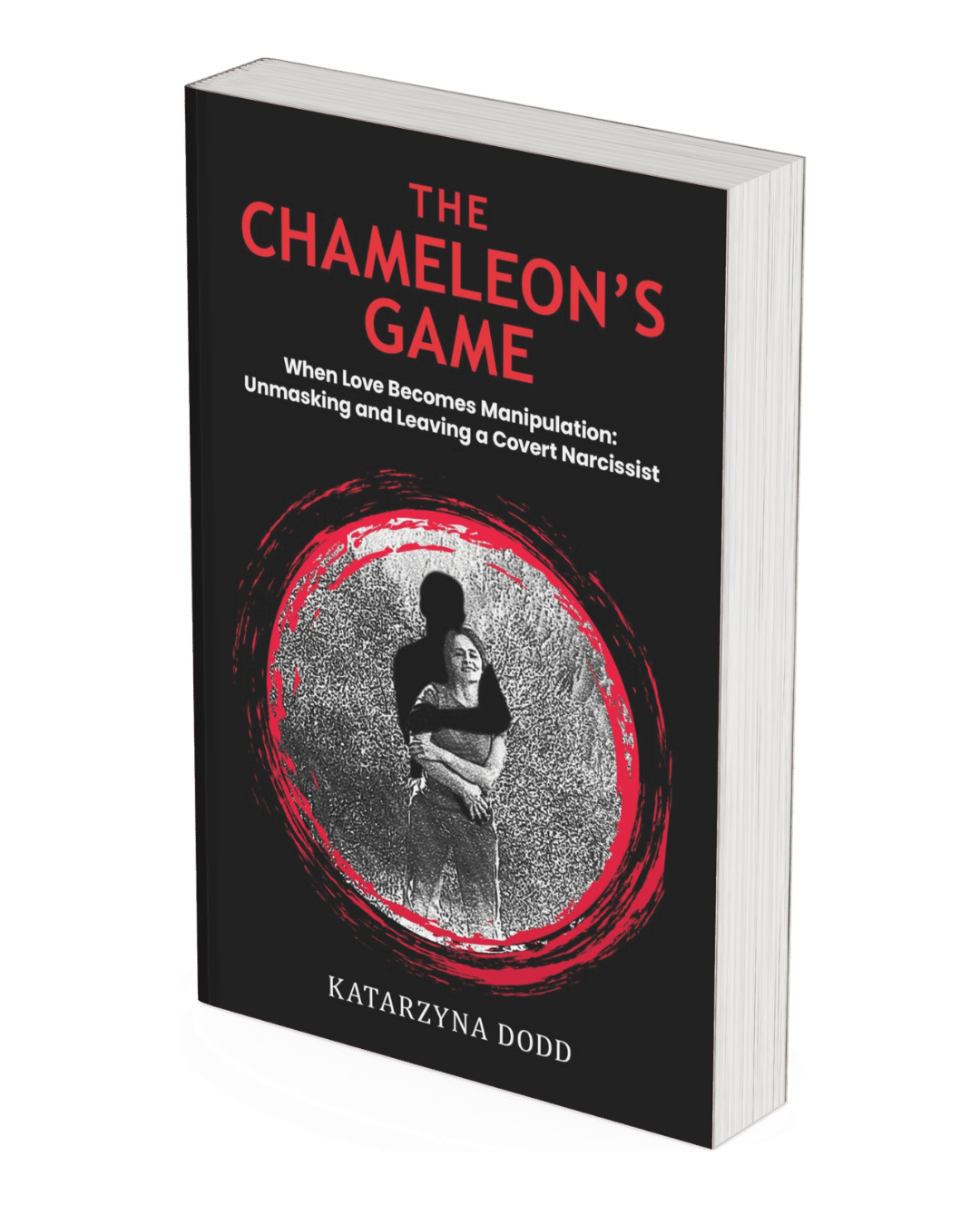
Are you ready to play the game?
Don’t just read a story—step into one. Claim your copy of
The Chameleon’s Game today and discover why everyone is talking about the book that refuses to let you go.

- Contact Katarzyna “Kasia” Dodd.
- More articles from our Executive Contributor, Kasia.
