


The Psychological Survival Tool You’re Already Using (And Don’t Even Know It)
Displacement and What to Do With It
There’s a particular kind of exhaustion that shows up when life hands you something too big to hold all at once.
A parent’s terminal diagnosis. A relationship ending. Losing a job you love. A loss so profound your nervous system doesn’t quite know where to put it. So it puts it somewhere else.
“Somewhere else” has a name in psychology: It’s called displacement, and understanding it might be one of the most compassionate, self-aware things you can do when you’re living under chronic stress or navigating grief.
What Is Displacement, Really?
Displacement is a psychological defense mechanism, first described by psychologist Freud and later expanded by his daughter Anna Freud. At its core, it’s the unconscious act of redirecting an emotion, usually one that feels too overwhelming, too dangerous, or too grief-laden to express directly, toward a substitute target or outlet.
In other words, when we can’t feel what we feel where we feel it, we feel it somewhere safer.
Or somewhere more manageable for our systems.
Think of it like emotional hydraulics. The pressure doesn’t disappear. It just finds another pipe.
The classic example is the person who gets chewed out by their boss and comes home to snap at their partner. The anger was real; it just couldn’t go where it belonged, so it traveled downstream to somewhere that felt less threatening.
But displacement isn’t always that obvious. And it isn’t always anger.
The Grief We Don’t Know We’re Carrying
My mother is dying. And in the middle of all this entails—the appointments, plans, decisions, and the logistics of loving someone through their final chapter who’s living with you—I’ve noticed something in myself. I’m not falling apart. I’m functional. I’m focused, productive, and organized.
I’m doing all the things that need to be done. I’m getting through this time by focused “doingness,” and I honestly believe “busy” is a stage in grief.
I also noticed something else: I’m being hard on my body.
I’m pushing myself too hard in workouts, criticizing myself in the mirror, and holding myself to impossible standards of productivity. On the surface, it looked like discipline.
But underneath? I know what it really is. It’s grief with nowhere to go.
That is displacement in real life.
The pain of watching my mother leave this world is too enormous to sit with in the quiet moments. So my psyche (smart, protective, and deeply human) routes pain into something I can control. My body. My performance. My relentless forward motion.
It’s not a weakness. It’s actually the nervous system doing its best, but when left unexamined, the costs outweigh the benefits.
When Displacement Helps and When It Hurts
Here’s what’s important to understand: displacement is not always harmful. In fact, it can be incredibly useful in the short term.
When you are in the thick of a crisis, caring for a dying parent, managing an emergency, or holding yourself together for others who need you, your psyche needs a pressure valve.
Channeling upset, grief, or anxiety into focused action, physical movement, creative output, or purposeful work can be an adaptive, healthy response.
It’s what allows us to function when falling apart isn’t an option.
Ancient warriors learned to turn their fear into ferocity. A grieving mother throws herself into advocacy after loss to make sure the same thing never happens to anyone else. A heartbroken songwriter channels their pain into an amazing song.
These are displacements at their most redemptive.
Psychologically, the problem arises when displacement becomes the only strategy, when the rerouted emotion starts damaging what it lands on: your body, your relationships, your sense of self-worth. When you’re white-knuckling through loss or grief, but disguising it as perfectionism; when chronic stress gets managed through control, punishment, or numbing rather than genuinely processing the emotions. When the outbursts of your pain are misdirected.
That’s when this protective mechanism becomes a wound.

How to Work With Displacement, Not Against It
The goal isn’t to eliminate displacement, but to become aware of it so you can choose how to use it.
- Notice the pattern without judgment when you find yourself being unusually harsh with your body, snapping at people you love, obsessing over things that don’t matter, or driving yourself relentlessly: pause. Ask gently: What am I actually feeling that I haven’t been able to sit with?
- Name the real emotion. Grief. Fear. Helplessness. Rage at the unfairness of it all. These emotions need a name before they can move through you. They don’t need to be fixed; they need to be acknowledged.
- Create intentional outlets. If you need to displace, do it consciously. A hard workout, a creative project, or a meaningful cause can honor the pressure you’re carrying without turning it against yourself.
- Tend to the original wound. Here is the hard work. Sitting with grief. Allowing yourself to cry. Letting yourself not be okay, even for a few minutes, is part of the process. Journaling, therapy, and trusted conversation—these create space for the feeling to exist where it actually belongs.
- Be extraordinarily gentle with your body. If you’ve been displacing emotional pain into physical self-criticism or punishment, your body deserves an apology and a redirect. It has been holding you together. It deserves care, not critique.
The Compassionate Reframe
If you recognize yourself in any of this, if you’ve been white-knuckling through something enormous while somehow also hearing a loud inner bully, know this: you are not broken. You are not failing at grief. You are not weak.
You are human.
You are doing what humans do when the heart is overwhelmed: finding a way to keep going.
This awareness is the turning point. When you see displacement for what it is, you can meet yourself with compassion instead of confusion.
You can honor the grief that’s been traveling in disguise. And slowly, gently, you can start to let it land where it belongs, not as something to survive, but as something to move through.
You’ve got this.
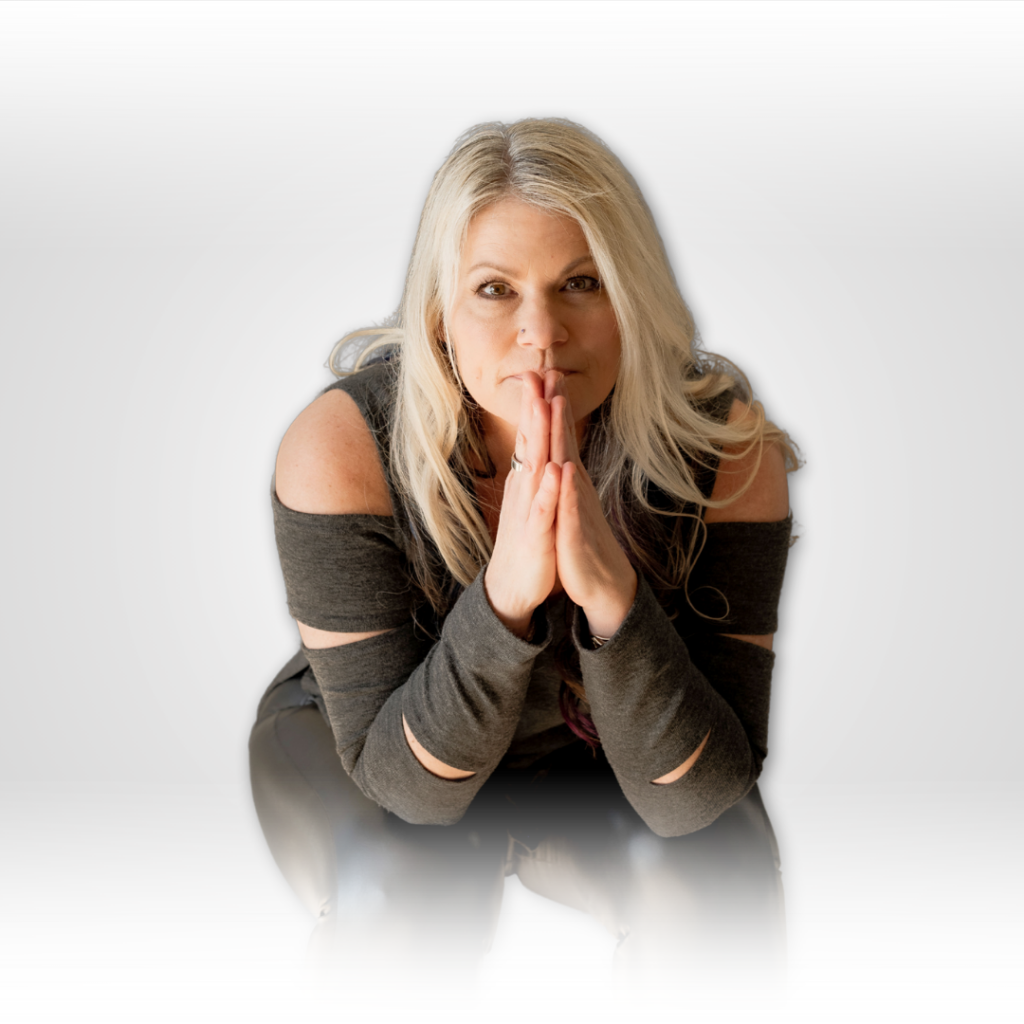
“When life hands you something too big to hold, your system finds somewhere else to put it. Learning to recognize this is where healing begins.”
– Theresa Byrne
BOOK YOUR ACTIVATION SESSION TODAY.
AND RELEASE SOMETHING THAT HOLDS YOU BACK!

- Connect with Theresa Byrne
- More articles are available from our VIP Executive Contributor, Theresa Byrne
