


Dear Face™ Aging Without Resistance: Why working with your face, not against it, changes how you look, feel, and connect
Dear Face,
I believe there is so much pressure to look a certain way as I get older. Smooth, lifted, unchanged. But it doesn’t feel like me. I want to take care of my face, but I would rather not feel like I am fighting against it. Is there a different way to approach this issue?
— Wanting to age, but still feel like myself
This question reflects something many women are starting to feel, even if they have not fully articulated it.
At some point, the goal quietly shifts. It is no longer just about looking younger. It becomes about feeling aligned, recognizable, and still fully yourself. You want to look in the mirror and see a face that reflects how you feel inside, not one that feels controlled or unfamiliar.
Beauty has gradually been redefined as something smoother and more controlled, often with less expression. When you consider the influence of social media and the beauty industry, it becomes easier to understand how that message has taken hold.
And yet, when you look at how the face actually functions, expression is not something to minimize. It is part of how we communicate, connect, and stay engaged with the world around us.
Expression is part of how we stay connected
The face is not simply aesthetic. It is one of the primary ways we relate to each other.
Every shift in the eyes, the mouth, and the brow carries information. It signals presence, empathy, attention, and response. This is not just a social observation. It is supported by neuroscience.
Research on facial feedback has shown that facial expressions are part of how the brain processes emotion. When facial movement is restricted, activity in areas such as the amygdala can change, influencing how we experience and interpret emotional signals. Expression is not separate from feeling. It is part of the loop that keeps us engaged with ourselves and with others.
When expression becomes limited, whether through habit or intervention, something subtle begins to shift.
Your face still looks like you, but it no longer feels like a full expression of who you are.
And others, even if they cannot fully explain it, experience that difference as well.
What changes is not just appearance. It is a connection.
How we began working against the face
There has been a gradual shift in how we approach aging.
We have come to associate youth with stillness and aging with movement. Lines are seen as something to prevent, and expression is often viewed as the cause.
But biologically, the opposite is often true.
Movement supports circulation. Expression stimulates neural activity. Responsive tissue maintains vitality through flow, hydration, and communication between systems.
When we begin to hold, restrict, or override those natural processes, the face can lose some of its adaptability. Over time, this can show up as tension, stagnation, and a loss of responsiveness in the tissue.
This is where many women begin to feel a quiet resistance. Not to aging itself, but to the idea that they need to become less expressive, less dynamic, or less themselves in order to look good.
Aging without resistance is not passive
Aging without resistance does not mean doing nothing. It does not mean stepping back or ignoring the needs of the skin.
Everything we do to our face today matters, and over time, it shows. How we cleanse, how we hydrate, how we support or restrict movement in the tissue, and how we hold expression all leave an imprint.
Over time, those choices accumulate. They show up as resilience and vitality, or as strain and stagnation.
The goal is not to leave the face alone.
It is to support it in a way that works with its natural structure and function.
Working with the face does not mean being passive.
It means being precise.

A different way to support the face
When you begin to shift your approach, the focus changes from control to support.
Instead of trying to smooth or hold the face in place, the goal becomes restoring function across the layers that influence how the face looks and feels.
This includes:
Releasing tension held in the muscles and fascia, allowing expression to return more naturally
Supporting lymphatic flow and circulation, which helps reduce stagnation and bring vitality back into the tissue
Maintaining hydration and barrier integrity so the skin can respond and adapt more effectively
Preserving expression as part of a healthy, responsive system rather than something to limit
This is not about doing less.
It is about doing what actually supports the face.
Where a natural facelift approach fits
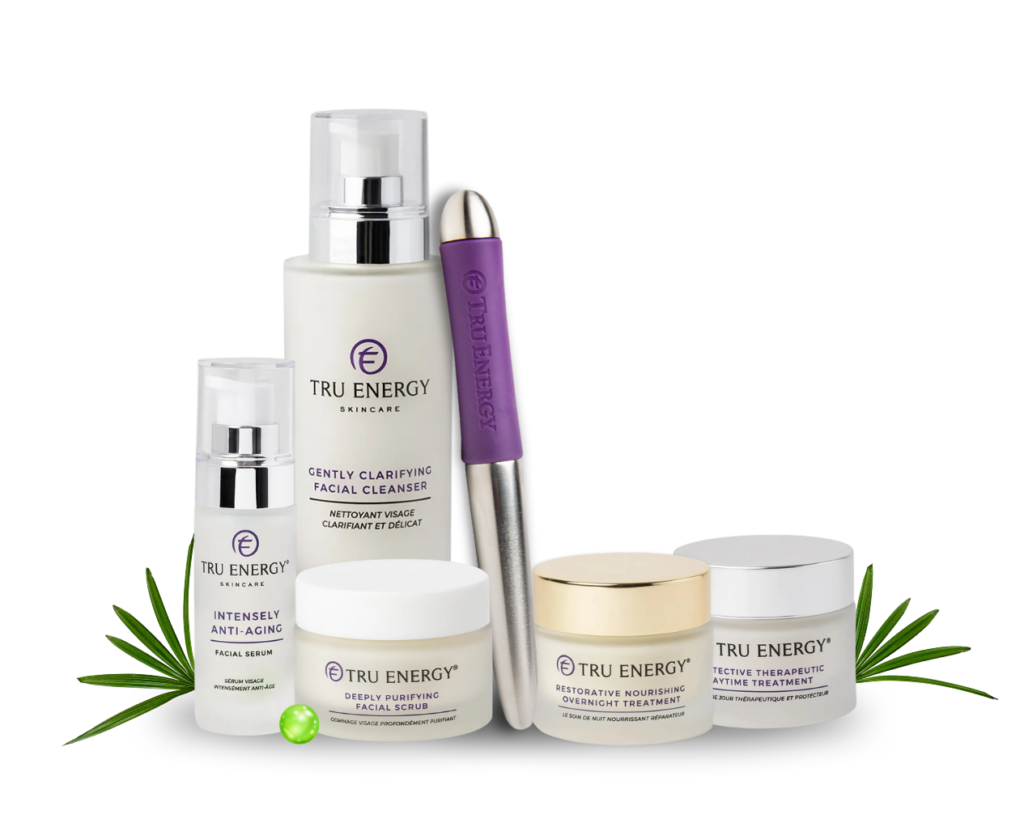
This is the foundation behind the Tru Energy Facial System.
Rather than forcing the face into a position, the approach is to support the underlying structures that create natural lift, tone, and responsiveness.
By working with the muscles, fascia, and lymphatic pathways, and supporting the skin with bio-adaptive formulations, the system helps release the tension that pulls the face downward, restore movement, and improve overall vitality in the tissue.
Over time, the face begins to reorganize in ways that make it look more natural, more expressive, and more like itself.
Not fixed.
Not frozen.
But responsive.
The shift that changes everything
When you begin to approach your face this way, something important changes.
You are no longer trying to become a version of yourself that is held in place.
You are supporting a version of yourself that is evolving.
Aging becomes less about resisting change and more about maintaining connection.
Connection to your expression.
Connection to your body.
Connection to the people around you.
Pro Tip
Notice when you subtly hold or control your expression throughout the day.
Shift your focus to softening, allowing movement, and supporting the tissue rather than fixing it. Incorporate consistent daily support for circulation and lymphatic flow, and create a simple evening ritual that encourages release.
Using a jade eye mask at night can help ease tension around the eyes and support a more parasympathetic state before sleep, especially in one of the areas where we tend to hold the most tension.
Your face does not need to be held in place to look good.
It needs to be supported so it can respond, express, and stay connected.
The goal was never to look like you haven’t lived.
The goal is to look like yourself, fully expressed, at every stage of life.
Dear Face,
Beauty isn’t something we correct—it’s something we restore. – C.G.
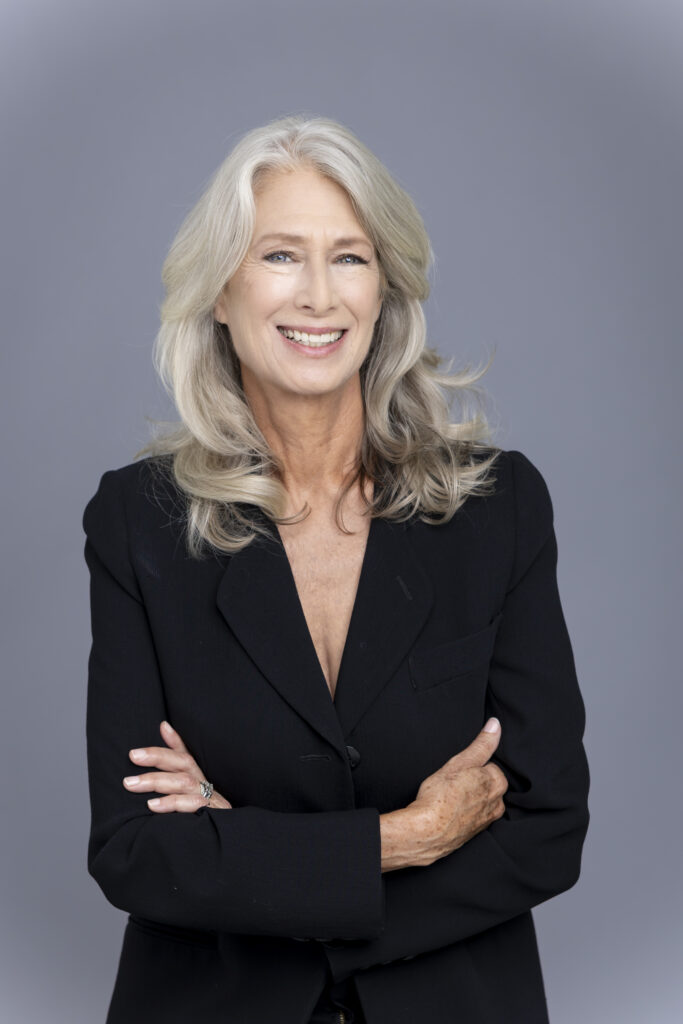
Dear FaceSM is a monthly column by Cathy Goldstein, AP, an acupuncture physician with over four decades of clinical and academic experience in holistic health. Her work views beauty as an expression of balance, vitality, and biological communication—exploring how restoring function supports a naturally resilient, expressive face.
Have a Question for Dear Face™?
Each column begins with a real question because communication is always happening. We’re just learning how to listen.
Dear Face™ is a monthly column by Cathy Goldstein, AP, an acupuncture physician with 40 years of clinical practice.
Her work approaches ageless beauty as a reflection of expression, vitality, and biological communication, supporting a look that feels as alive as it appears. It’s an expression of balance, vitality, and biological communication, exploring how restoring function supports a naturally resilient, expressive face.
Beauty isn’t something we correct; it’s something we restore.
— Cathy Goldstein, AP
- Connect with Cathy Goldstein
- More articles from our columnist, Cathy Goldstein
