


Dear Face™: When Your Face Holds Stress
Dear Face,
I don’t feel as stressed as I used to. And yet when I look in the mirror, my face tells a different story. My eyes look tighter, my mouth feels more set with lines starting to stay, and there is a heaviness that wasn’t there before. Even on days when I feel calm and grounded, my face does not reflect that. What is happening?
This is a thoughtful question, and it comes up more often than you might expect.
It is also not limited to one type of life experience. Some women notice this shift after moving through a stressful period, while others see it in the middle of a full and demanding season. In both cases, there can be a disconnect between how you feel internally and what your face continues to show.
What you are seeing is often not a sudden change in aging, but the accumulation of something happening beneath the surface. Over time, the face develops small, repeated patterns of holding that do not always release when the moment that created them has passed. I often describe these patterns as the emotional imprint of life’s ups and downs, stored in the tissue of the face.
When stress leaves an imprint
These patterns reflect stress, but more specifically, they create what we call micro-tension.
They are not the result of a single moment, and you do not need to feel overwhelmed to carry them. They form gradually through daily expressions and reactions that become familiar to the body and eventually automatic.
You may begin to recognize them in very specific ways:
- A jaw that stays slightly engaged or clenched, even at rest
- A brow that remains drawn or focused long after the task is complete
- Eyes that narrow with concentration and do not fully soften afterward
- A mouth that subtly pulls downward or holds tension between expressions
Over time, these patterns begin to influence how the face settles. What once moved easily starts to become more fixed. What once looked fluid begins to appear slightly drawn or held.

How does this begin to show on the face?
The face reflects more than the surface of the skin. It is supported by muscle, fascia, and the lymphatic system, all of which contribute to tone, movement, and overall vitality.
When micro-tension becomes consistent, the changes are not dramatic, but they are cumulative and very real:
- Muscles remain partially contracted, limiting natural expression and creating a more set appearance
- Fascia, which should glide and move, begins to feel more dense and less pliable, creating subtle drag through the face
- Lymphatic flow becomes less efficient, contributing to puffiness, fluid retention, or a sense of heaviness
- Circulation slows slightly, affecting brightness, tone, and the skin’s natural vitality
These changes happen gradually, which is why they are easy to miss as they form. If you haven’t noticed the subtle fatigue building over time, you may find yourself catching your reflection and thinking, “When did that happen?”
Why it may not match how you feel
One of the most reassuring aspects of this is understanding that the face does not always update at the same pace as the rest of you.
You may be taking better care of yourself, feeling more balanced, and moving through your days with greater ease. Those internal shifts are real. However, the patterns that have been held in the face often take longer to soften and, in many cases, need support to do so.
The face stores expression patterns over time. These patterns are emotional, but they are also physical and structural. They are part of how the body adapts, and they do not simply disappear when the conditions that created them improve.
With the right approach, they can absolutely change.
A more helpful way to think about it
Instead of assuming that the face is aging faster or losing something, it can be more helpful to consider that it may be holding more than it is releasing.
This shifts the entire direction of what you do next.
It allows you to move into action, rather than feeling like your only options are to correct, override, or force change.
The focus becomes restoring movement and responsiveness.

Supporting the face in a different way
When the goal is to soften micro-tension, release held patterns in the muscle and fascia, and allow for healthy lymphatic flow, the approach needs to work with the tissue rather than against it.
There are three areas that consistently make a difference:
Bring awareness to where you hold
Noticing is the first step in changing a pattern. When you become aware of the jaw, eyes, or brow holding tension, even briefly, it creates an opening for release. Something as simple as considering an “inside smile” can soften the eyes, eyebrows, and mouth in a very natural way.
Reintroduce movement into the tissue
The face responds to consistent, gentle stimulation. Supporting circulation, lymphatic flow, and fascia allows the tissue to regain mobility. This is not about intensity. It is about repetition and consistency that encourages the face to release, move, and respond again.
Support the skin so it can respond
Cellular hydration and barrier integrity influence how the skin behaves. When the skin is supported on this level, it becomes more receptive and better able to respond to everything else you are doing.
Where a consistent system helps
All of these layers are the foundation behind the Tru Energy® Facial System and protocol.
It was developed to support the face as a system, including the skin, underlying muscles, fascia, and the lymphatic flow that connects them. The Energy Wand and the 5-piece system work together to provide gentle, consistent stimulation that encourages movement, supports circulation, and helps reduce stagnation within the tissue.
Over time, this allows the face to release what it has been holding. The tension that has been pulling and subtly dragging the features begins to soften, and the face returns to a more natural state of movement, tone, and expression.
The shift that changes the outcome
When you begin to look at your face through this lens, the conversation changes.
Instead of thinking that you need something stronger or more aggressive, you begin to recognize that what you are really looking for is responsiveness.
You are not trying to force change.
You are helping the skin and the underlying tissue respond again.

Pro Tip
If your face looks tighter or more set than it feels, take a moment to pause before adding anything new to your routine.
Use tools and techniques that gently soften the jaw, relax the eyes, and allow the mouth to rest. Support your skin as a system with consistent movement and hydration during the day, and create a simple evening ritual that encourages the face to release.
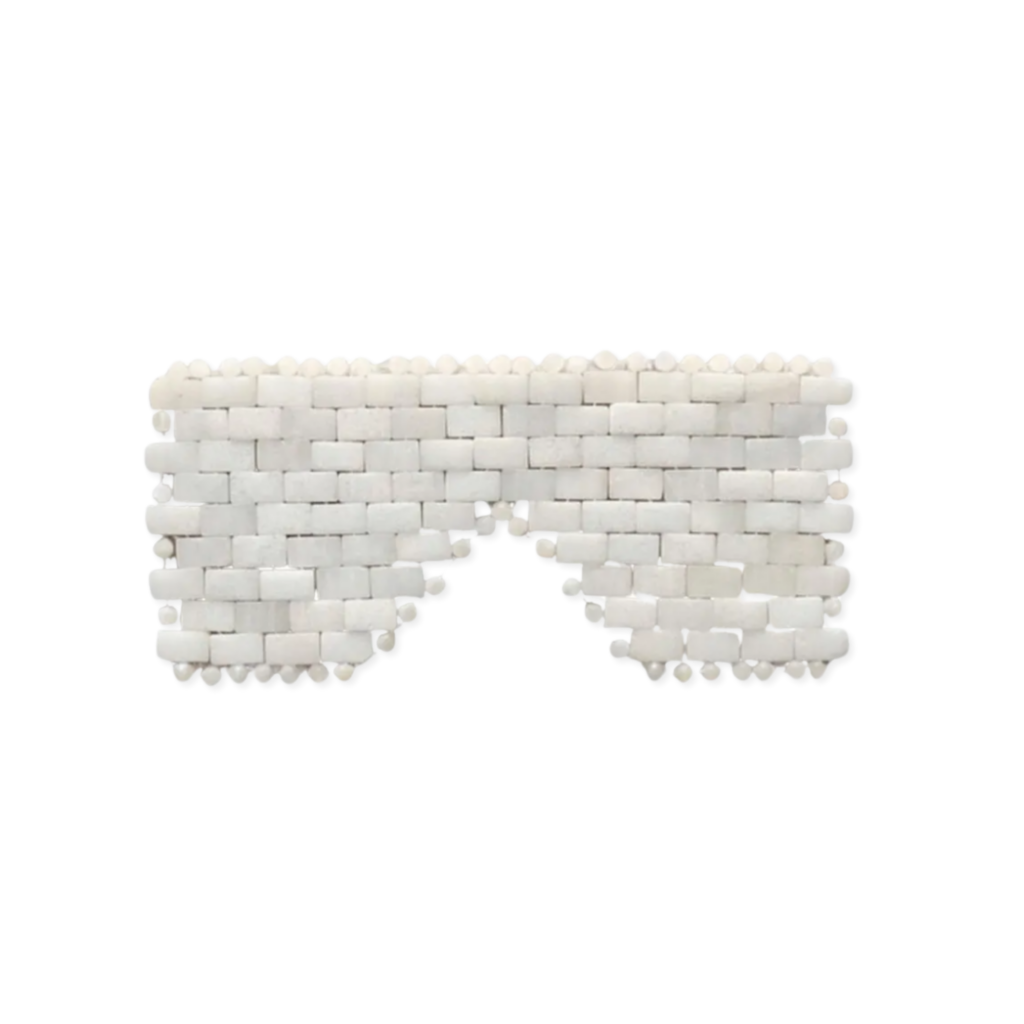
In the evening, incorporating a jade eye mask can help signal the body to shift into a more parasympathetic state, supporting deeper relaxation through the eyes and surrounding tissue.
The most noticeable changes often come not from doing more, but from helping the face release and respond more naturally.
“Dear Face is a monthly reflection on the emotional, energetic, and physical language of the face.”
– Cathy Goldstein
Have a Question for Dear Face™?
Each column begins with a real question because communication is always happening. We’re just learning how to listen.
Dear Face™ is a monthly column by Cathy Goldstein, AP, an acupuncture physician with 40 years of clinical practice.
Her work approaches ageless beauty as a reflection of expression, vitality, and biological communication, supporting a look that feels as alive as it appears. It’s an expression of balance, vitality, and biological communication, exploring how restoring function supports a naturally resilient, expressive face.
Beauty isn’t something we correct; it’s something we restore.
— Cathy Goldstein, AP

- Connect with Cathy Goldestein
- More articles from our columnist, Cathy Goldestein
