


Dear Face™ is a quarterly column by Cathy Goldstein, AP, an acupuncture physician with 40 years of clinical practice. Her work approaches ageless beauty as a reflection of expression, vitality, and biological communication—supporting a look that feels as alive as it appears.
Dear Face™ is a monthly reflection on the emotional, energetic, and physical language of the face.
Dear Face™: Why Do I Feel Better Than I Look?
Dear Face™,
I’ve changed my life.
I eat better. I’ve slowed down. I’ve done the inner work. I feel calmer, healthier, and more grounded than I did years ago.
But when I look in the mirror, how I feel and how I look don’t match. And I don’t feel good about what I’m seeing.
Why? — Feeling better inside than I look.
This question comes up often—especially in spring. When the inside of your life feels lighter and more aligned, it can be confusing to see a face that still looks serious, tired, or unchanged. It may even feel discouraging, as though the mirror missed the memo.
But this isn’t a contradiction. It’s timing.
When the Inside Changes First
Most people expect the face to be the first place the transformation shows up. In reality, it’s often the last.
The face isn’t just skin. It’s a living record of how you’ve adapted to life—how you’ve listened, responded, protected, and held yourself through different seasons. It reflects history, not just habits.
When healing begins, the body moves in stages. It always prioritizes function before appearance.
How the Body Reorganizes
Change begins with how the body communicates internally.
- Electrical signaling through the physical nervous system begins to steady
- The body’s fluid-based communication network—the Liquid Nervous System—starts to move differently
- Circulation improves
- Lymphatic flow becomes more responsive
- Tissues soften where they were once braced
At the same time, there is a quieter layer of communication at work: the Bio-Photon Signaling Network. This light-based signaling field helps cell-to-cell communication and a sense of coherence, safety, and readiness for change—often before anything visible shifts on the surface.
As these systems stabilize:
- Breath deepens
- Posture adjusts
- Muscle tone begins to recalibrate
The face, however, responds more slowly.
Think of it like going on vacation. You may feel yourself relax almost immediately—your shoulders drop, your breath deepens, and your mood lifts. But it often takes days before your sleep improves, your digestion settles, or your face truly softens.
Your system needs time to trust that the change is real.
The face is densely innervated, richly vascularized, and deeply tied to emotional expression and social signaling. Facial muscles don’t just move skin—they reflect learned patterns of response.
Because of this, the face tends to wait. It responds when the body signals consistency, not effort.
This is why someone can feel calmer and more aligned—yet still notice:
- Sagging or heaviness
- Deeper frown lines
- Dryness or dullness
- Spots or shadows that seem more pronounced
These changes aren’t random. They are feedback. The internal systems are stabilizing, and the face is listening.
Three Gentle Truths About the Face
If you’ve ever thought, I feel better than I look, these truths matter.
- The face reflects history, not just behavior. You can change routines quickly. The face changes more slowly.
- Expression patterns often outlive emotional resolution. Muscles may still hold familiar shapes even after inner healing has occurred.
- Spring invites release, not reinvention. This season isn’t asking you to become someone new—only to let go of what no longer needs to be held.
You’re not fixing skin.
You’re updating communication.
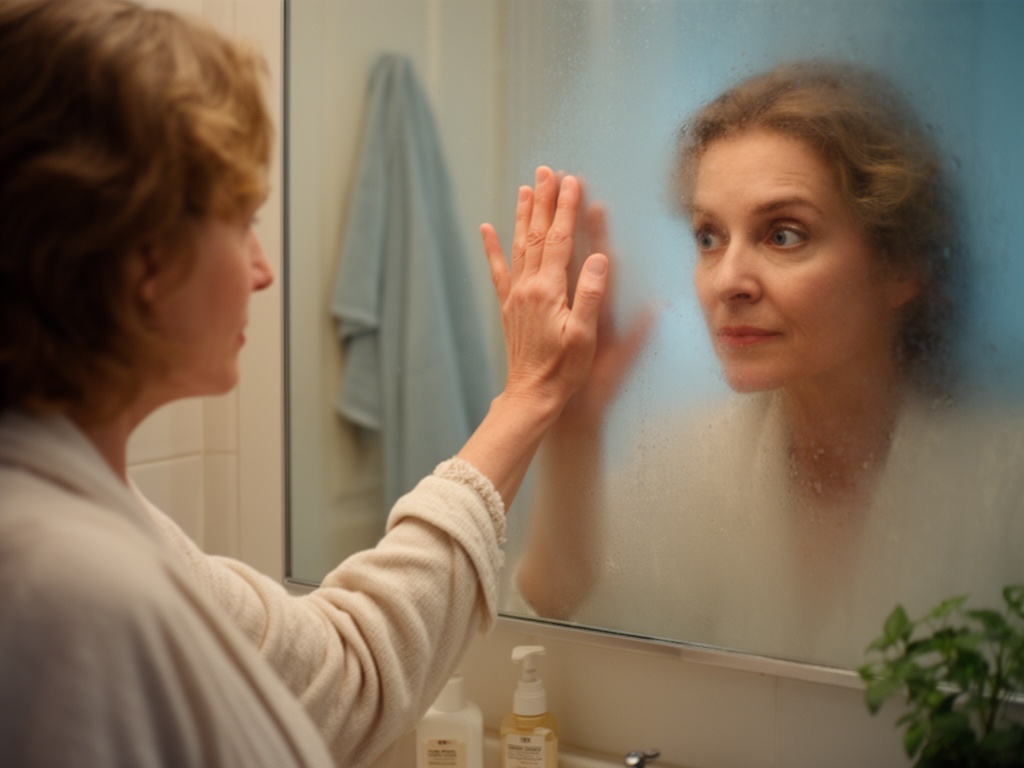
When the Mirror Feels Out of Sync
Spring increases light, movement, and visibility. Many people feel better in their bodies and moods yet notice their face hasn’t softened yet.
Winter trains us to hold.
Spring asks us to flow.
If the face hasn’t been invited into that transition, it may lag behind—not because it’s resistant, but because it’s integrating.
The face isn’t behind.
It’s recalibrating.
What Permission Looks Like
Permission isn’t a product or a procedure. It’s an internal signal the body recognizes before the mirror ever does.
It sounds more like this:
- My body feels supported
- My face can rest here
- Softness is allowed
- Expression can move freely
- This state is familiar now
When this signal becomes consistent, the face responds—naturally and without force.
Why Dear Face™ Exists
Most Dear Face questions don’t begin as questions about skin.
They begin with what women see in the mirror:
- Lines that feel heavier
- Skin that looks drier
- Expression that feels stuck
- A reflection that doesn’t match how they feel inside
These are symptoms, but they’re also messages.
What most women notice first are the visible signs:
- Spots that seem more stubborn
- Sagging that doesn’t respond the way it used to
- Frown lines that feel etched in
- Dryness or crepey texture despite good care
What’s easy to miss is that these changes often show up before the deeper systems have entirely reorganized.
This is also why, when someone begins a new skincare ritual or system or uses tools with intention, they may sense shifts before they see dramatic change. The face often responds internally first—through softness, comfort, or ease—before appearance catches up.
This column exists to help translate what the face is communicating—emotionally, energetically, and physically—so understanding can replace pressure.
When a woman understands her reflection, she stops fighting it. And when the face no longer feels managed or corrected, it begins to respond differently.
Leaving You With This
The face responds to consistency, not urgency. To warmth, not scrutiny.
Nothing you see is a mistake. Nothing is behind.
Your reflection is part of a larger conversation—and it changes as the rest of you does.
Dear Face is a monthly reflection on the emotional, energetic, and physical language of the face.
With warmth and trust in your body’s intelligence,
Cathy
Cathy Goldstein, AP, is an Acupuncture Physician, energy medicine pioneer, and founder of Tru Energy® Skincare—a bio-adaptive, frequency-infused system designed to restore natural radiance through the body’s Energy Highway™. Creator of Functional Esthetics™, Cathy blends 38 years of clinical experience with cutting-edge energetics to redefine beauty as vitality in motion.
“Melasma cannot be bleached away—it can only be understood and gently corrected from within.” – Cathy Goldstein, AP

- Connect with Cathy Goldestein
- More articles from our columnist Cathy Goldestein
