


Is Your Dream House a Haunted Nightmare? – You finally found your dream house. It’s in a great neighborhood and close to good schools, shopping, and work. But why was it on the market for so long? Why was it such a bargain when comparable houses nearby were much more expensive? Then, after you move in, the lights flip on and off by themselves, objects suddenly move on their own, and you hear eerie voices and glimpse shadowy apparitions. Is your dream house a haunted nightmare?
If so, legally speaking, it’s considered a stigmatized property. As the “Psychic Lawyer,” I’ve been featured on TV, radio, and print media when the paranormal and the legal system collide. Real estate stigmatized by hauntings or paranormal activity presents both tricks and treats for the legal system.
Over 20 U.S. states have “Stigma Disclosure Statutes,” which require the seller of real estate to disclose unsavory details about a property’s history. This includes structural issues, water damage, termites, whether a violent crime or death occurred in the house—and paranormal activity.
The National Association of Realtors reports that stigmatized properties are tricky because they take up to 45% longer to sell, and sales prices can be 3% to 18% lower than market. Many buyers refuse to even see a house where a gruesome crime or suicide occurred. That may be why Florida, Maryland, Mississippi, and Texas don’t require disclosure of a death on the property.
The stigma of paranormal activity—ghostly sightings, unexplained events, or supernatural occurrences—presents unique legal issues. It’s not exactly a treat for occupants of real estate when the paranormal activity is allegedly a poltergeist—a spirit that causes physical disturbances by moving objects and making noises—the proverbially “things which go bump in the night.”
Stigma Disclosure Statutes in Massachusetts, Minnesota, New Jersey, and New York actually mention paranormal activity. Massachusetts and Minnesota laws, however, specify there’s no duty for sellers to disclose paranormal activity. New Jersey takes a “Don’t Ask, Don’t Tell” approach, where unless the buyer asks about it, the seller doesn’t have to disclose alleged paranormal activity.
Only New York requires disclosure of a haunted reputation. This statutory requirement flows from the 1991 New York Supreme Court decision in Stambovsky v. Ackley.

Helen Ackley owned a house where it was alleged Revolutionary War-era poltergeists were shaking the beds and slamming doors. Ackley advertised this and profited from the haunted reputation by charging ghost hunters fees to investigate the paranormal activity. Then Ackley sold the house without disclosing these facts to buyer Jeffrey Stambovsky.
This is a great example of when the paranormal and the legal system collide. The Establishment Clause in the 1st Amendment to the United States Constitution states, “Congress shall make no law respecting an establishment of religion.” In other words, for a judge to decide that a house is haunted would be a government decree that spirits and, hence, an afterlife exist. This violates the Establishment Clause, meaning the decision would be unconstitutional. The New York Supreme Court didn’t rule the house was haunted; rather, it ruled on the basis of misrepresentation and fraud. Since the seller had publicly promoted the hauntings for profit yet didn’t disclose that fact to the buyer, this omission was a misrepresentation which required cancellation of the sales contract.
On the flip side of the karmic coin is a haunted house case from Tom’s River, New Jersey. Plaintiffs Josue Chinchilla and Michele Callan rented a house. The couple and Callan’s two children moved in. They reported hearing ghostly voices, lights that switched on and off by themselves, clothes and towels flew out of closets, and something tugged their bed covers at night. Their family pastor was consulted. He allegedly told them the house was possessed by a demon. Shore Paranormal Research Society of Tom’s River investigated the property but found “inconclusive evidence.” Plaintiffs sued to break the lease and for the return of their security deposit.
The parties agreed to have their case resolved on “The People’s Court” TV Show. The landlord’s attorney argued that the plaintiffs’ complaints were subjective and couldn’t be proved legally. The judge ruled in favor of the landlord and told the plaintiffs, “I’m not ridiculing you in any way, but as a matter of law, I can’t determine the house is haunted. Unless I find a right to breach a contract, you can’t break the lease.”
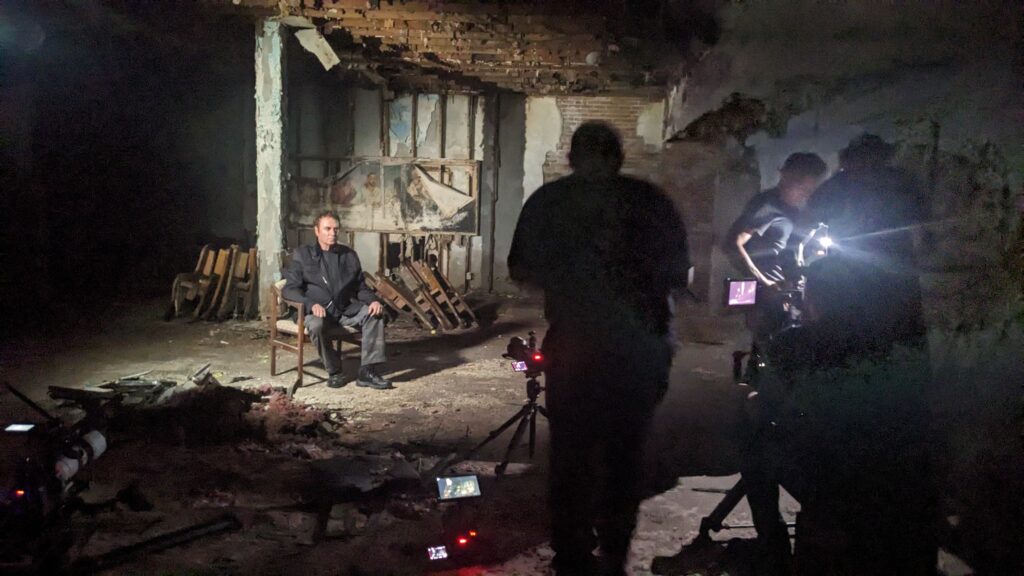
Recently I was featured in the Discovery Channel Show “Destinations of the Damned with Zak Bagans” in my capacity as a paranormal investigator and the “Psychic Lawyer.” The investigation occurred at the Indiana State Sanatorium, which was built on 500 acres in 1907 as the Indiana Tuberculosis Hospital. It was a house of horrors for patients who were subjected to ineffective and brutal treatments. When antibiotics halted the spread of tuberculosis in the 1940s, it became a psychiatric care facility. Rechristened the Indiana State Sanatorium, abuse of patients was rampant; scores died under suspicious circumstances. In 2009, two workers were killed in what police suspected was a murder-suicide. The facility closed permanently in 2011. It’s no surprise that spirits are said to roam this site of so many tragic deaths.
During my investigation, I used two different psychic abilities: psychometry and mediumship. Matter retains energetic vibration, and psychometry is in alignment with the energetic vibration of a physical location to receive impressions about what occurred there. Mediumship is communication with spirits. Combining the insights I received psychically with my experience as a prosecutor and criminal defense attorney revealed previously overlooked details about the alleged murder-suicide. Sorry, but I’m obligated by the show not to let the black cat out of the bag. To find out what happened, the episode of “Destinations of the Damned” entitled “Fortress of Evil” can be viewed on Discovery Plus, Hulu, and Max.
So—If your house is haunted, do you Exorcise or advertise?
Paranormally stigmatized real estate can either be a trick to sell or a treat financially. Things that go bump in the night can actually bump up property values. The Manhattan penthouse of the late comedy legend Joan Rivers is allegedly haunted by a spirit known as Mrs. Spencer, who was J.P. Morgan’s niece. Rivers claimed she even hired a voodoo priestess to exorcise the spirit. The penthouse sold after Joan Rivers’ death for 28 million.
Paranormal hotspots can also be a revenue stream for property owners. Fees can be charged to paranormal investigation teams or visitors who want to spend the night in a haunted house. There are legal ramifications, though. Haunted properties can be hazardous, not necessarily because of the paranormal, but because of the practical. It’s dangerous wandering through dark, decrepit buildings at night. Some insurance companies now offer liability policies to Paranormal Investigation Teams.
Thrill seekers and paranormal enthusiasts flock to stay at haunted locations like the Lizzie Borden House or The Stanley Hotel, the scene of Stephen King’s “The Shining.” Tours of Haunted Properties include Chicago’s North Clark Street Garage, site of the St. Valentine’s Day Massacre, as well as Lucille Ball’s Beverly Hills Mansion, where many claim Lucy’s spirit still lingers.
When looking to purchase or lease real estate, keep in mind the property with a ghostly reputation isn’t always the eerie Gothic Mansion on the hill—it just might be what you think is your dream house…

FREE OFFER: Mark Anthony conducts free on-air readings on his livestream show THE PSYCHIC & THE DOC on Thursdays at 7 pm ET/4 pm PT. Find out how to tune in and join us.
- To schedule a reading with Mark, visit his website
- More articles from our VIP Executive Contributor, Mark Anthony.
