


The Hidden Cost of Holding On
Autumn has always struck me as one of nature’s most eloquent teachers. As the leaves begin to fall, trees do not resist the change. They release what has completed its cycle, conserve their energy, and prepare quietly for renewal. What appears to be loss is, in fact, an essential part of growth.
Human beings are not so different. There are times in life when we know, often long before we are willing to admit it, that something no longer fits. A relationship may have run its course. A role that once gave us purpose may now feel restrictive. A belief that once protected us may be limiting who we are becoming. Yet despite recognizing this, we continue to hold on to familiar stories, old disappointments, inherited expectations, and identities that no longer reflect the truth of who we are.
The question is not whether change is necessary. Life is always moving, and we are always being shaped by experience. The real question is what it is costing us to resist that movement and continue carrying what has already completed its purpose.
Why We Hold On
Holding on can feel like a form of loyalty. We tell ourselves that if we try harder, remain patient, or wait a little longer, things may return to the way they once were. Occasionally, we stay attached because uncertainty feels more frightening than familiarity. Even when something is no longer nourishing us, it may still feel safer than stepping into the unknown.
What we cling to is not only a person, a role, or a circumstance. We also hold on to the meanings we have given them. A painful story may become part of our identity. An old ambition may continue to define our sense of worth. Expectations inherited from family or culture may shape decisions long after they have ceased to reflect who we truly are.
There comes a point when what once supported us begins to drain us. What initially protected us or gave us direction can eventually become a burden that limits our energy, our clarity, and our capacity to grow.
The Weight We Carry
When we hold on for too long, the effects are felt throughout the whole system. The body may become tense, fatigued, or unsettled. Emotions may remain tied to grief, resentment, or fear. The mind may replay the same thoughts in an attempt to justify staying where we are. Our actions, or our reluctance to act, reinforce a life that no longer reflects who we are becoming.
Over time, this internal conflict consumes a surprising amount of energy. Many people assume they need more motivation, greater discipline, or a better strategy. Often, what they need is the willingness to acknowledge that they are carrying something that no longer belongs in the next chapter of their lives.
Lessons from the Fool’s Journey
In my bestselling book Tarot for Self-Transformation: Your Journey to Happiness Mapped Out, I explore the symbolic journey of The Fool, which mirrors the stages of human development and self-awareness. Three of the most significant cards in that journey are The Hanged Man, Death, and Judgment.
The Hanged Man represents the pause that invites us to see life from a different perspective. Death symbolizes the end of a cycle and the necessity of release. Judgment reflects awakening and the call to step into a more authentic expression of ourselves. Although these images belong to the language of Tarot, their meaning is universal. Before any meaningful transformation can occur, we must release what is outdated so something more aligned can emerge.

Letting Go Is an Act of Trust
Letting go does not mean erasing the past or dismissing what has mattered. It means recognizing that life is asking us to evolve. This process rarely happens all at once. It unfolds as we become willing to feel our emotions, question our assumptions, and release the stories that keep us tethered to an earlier version of ourselves.
In my work, I have repeatedly seen that clarity often appears not when we add something new, but when we stop carrying what no longer serves us. Space is created, energy returns, and a different perspective becomes possible.
What Are You Still Carrying?
At certain points in life, it is worth asking a simple but profound question: What am I still carrying that no longer belongs here? The answer may be an outdated ambition, a painful memory, a role we have outgrown, or a belief that once felt necessary but now limits our choices.
Awareness itself can be liberating. Once we see clearly what we are holding on to, we are better able to decide whether it still deserves a place in our lives.
Making Space for What Comes Next
Nature does not cling to what has completed its purpose. The falling leaves of autumn remind us that release is not failure. It is a natural and necessary part of every cycle of growth.
The same is true for us. Sometimes, the most important step forward is not acquiring more knowledge, working harder, or trying to force clarity. Sometimes growth begins when we trust ourselves enough to let go.
In that newly created space, something quieter and more authentic has room to emerge. Not a new identity imposed from the outside, but a deeper expression of who we have been becoming all along.
About the Author:
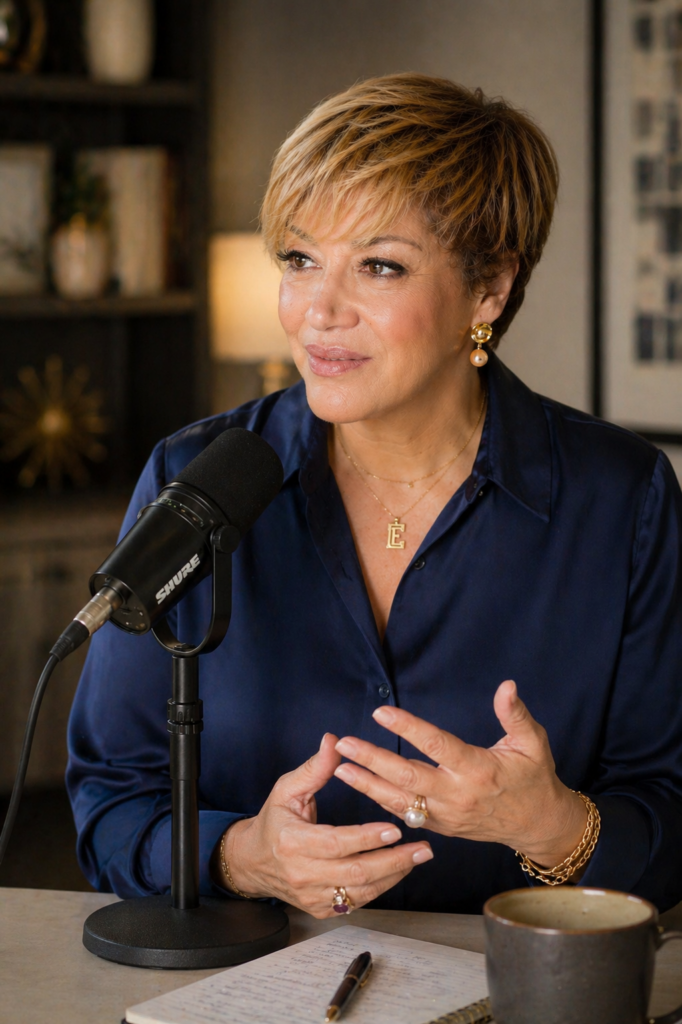
Sahar Huneidi Palmer is an author, podcaster, and creator of the Unbox The Real You™ methodology. For more than three decades, she has helped thousands of people develop greater self-awareness, navigate life transitions, and make clearer, more authentic decisions. She is the host of Unbox The Podcast, heard in over 50 countries, and the author of 13 books on personal growth, intuition, dreams, and self-transformation.
“Sometimes the most important step forward is not adding something new but trusting yourself enough to let go.”
— Sahar Huneidi Palmer
- Connect with Sahar Huneidi Palmer
- More articles from our columnist, Sahar Huneidi Palmer
