

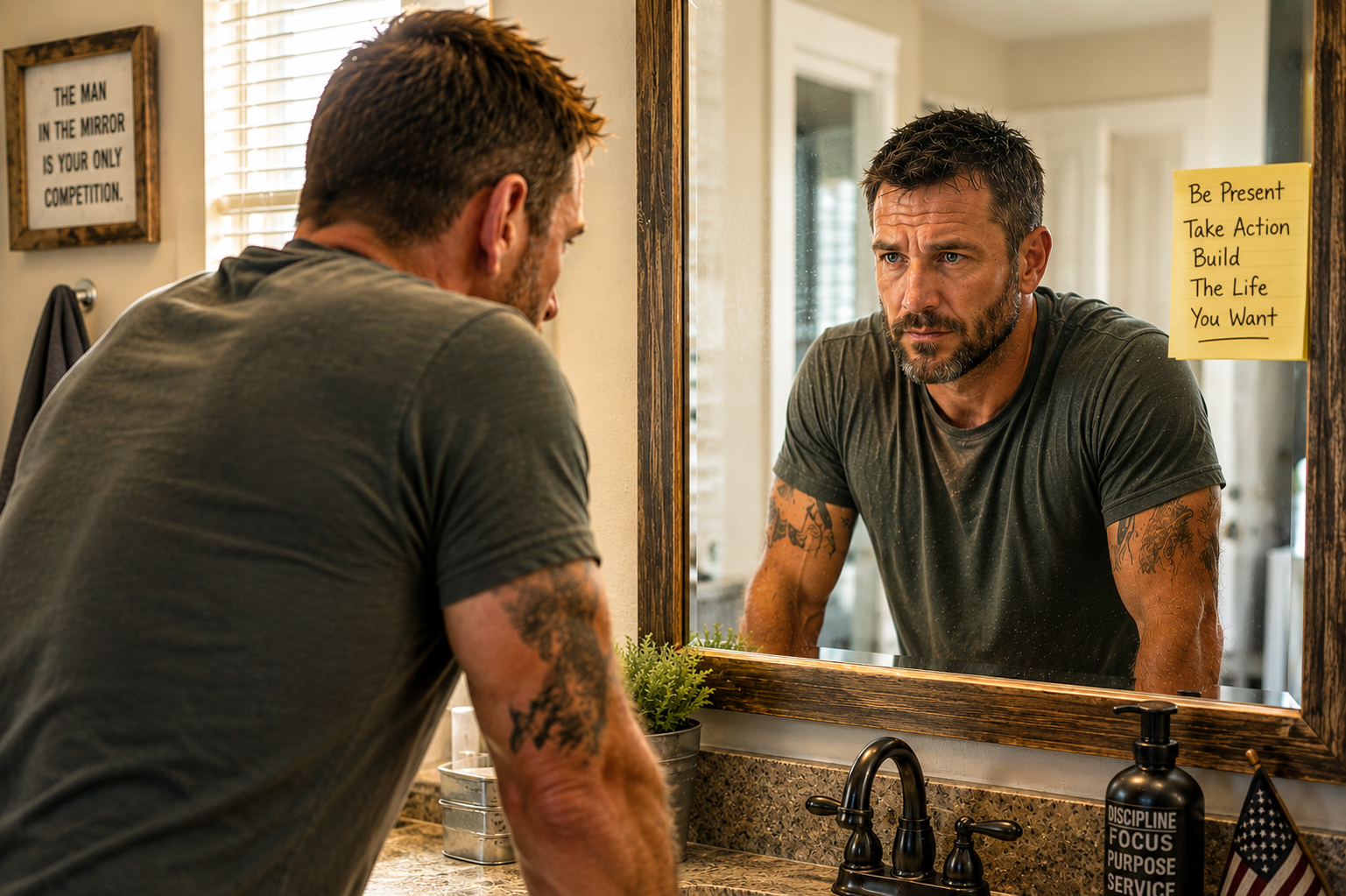
The Man in the Mirror: Stop Waiting for Life to Change and Start Becoming the Man You Were Meant to Be
For many veterans and first responders, life after the uniform can feel like standing in unfamiliar territory. The mission that once gave your days structure is gone. The pace has changed. The brotherhood isn’t as close. You may find yourself asking a question you’ve probably asked more than once:
“Is all of this even worth it?”
It’s a fair question, but it’s also the wrong one.
The answer isn’t found in the outcome. It’s found in the man you choose to become.
Too often, we measure our lives by promotions, income, relationships, recognition, or whether everything worked out according to plan. When those things don’t happen, it’s easy to believe the effort wasn’t worth it. But that’s a dangerous way to live because it places your happiness in circumstances you can’t fully control.
Instead, consider personal growth to be a devotional practice.
Not a religious ritual, but a daily commitment to becoming stronger, wiser, calmer, and more capable than you were yesterday. You don’t work on your mindset because you’re guaranteed a particular outcome. You work on yourself because becoming your best self is always worth the effort. Whatever comes afterward is simply a byproduct.
That mindset should feel familiar to anyone who served.
You didn’t train because you knew exactly what mission was coming. You trained because excellence became part of your identity. You maintained your equipment because that was the standard. You prepared because that’s who you were.
Life after service deserves the same commitment.
Every workout, every difficult conversation, every book you read, every apology you make, and every healthy habit you build is another vote for the man you want to see staring back at you in the mirror. The outcome will take care of itself; stop asking who did it, as that could be what keeps you stuck: the blame.
Responsible people ask, “What’s the solution?”
That doesn’t mean bad things didn’t happen. Many veterans and first responders carry experiences that no one should ever have to endure. Trauma is real. Betrayal is real. Divorce, injury, job loss, and disappointment are real. Yet remaining emotionally tied to those events doesn’t move your life forward. The day you begin letting go of blame is often the day your life starts to change.
You cannot drive forward while constantly looking in the rearview mirror.
Anger, resentment, bitterness, guilt, and regret become emotional weight that steals today’s opportunities because you’re still fighting yesterday’s battles. Post-Traumatic Growth doesn’t happen because life suddenly becomes fair. It happens because you decide your future deserves more attention than your past. Your family doesn’t need a perfect husband or father; they need a present one. Your community doesn’t need another angry voice. It needs another dependable leader.
That begins the moment you stop asking whose fault it is and start asking,
“What’s my next mission?”
Stop Repeating the Story. One of the key differences between coaching and therapy is often their purpose. Both have tremendous value. Therapists help people understand, process, and heal from painful experiences. That work can be life-changing.
Coaching serves a different role. Many veterans, law enforcement officers, firefighters, and first responders are naturally mission-oriented. They appreciate someone who listens, but they also want someone who is willing to say, “Okay…what’s the plan?”
A coaching client once shared an experience that perfectly illustrates this dynamic.
He had spent years replaying the same painful story about a former relationship. One day, after he told it to me once again, I stopped him. I said, “You’ve told me this story twice today already. You can tell it to me as many times as you want—but you’re paying me by the hour. Do you want to tell it again, or do you want to build an action plan so you can move beyond it?”
I saw in his eyes that question changed everything, and I saw a warrior again, gearing up for a new mission. Occasionally, the greatest prison isn’t what happened. It’s the story we’ve become comfortable repeating. There comes a point when healing isn’t about explaining yesterday one more time.
It’s about creating tomorrow.
Two NLP Tools to Help You Move Forward
The first technique is called Future Pacing.
Close your eyes and picture yourself one year from now. See yourself healthier. More peaceful. Stronger. Laughing with your family. Leading your community. Sleeping better. Serving with purpose again. Notice how you stand. How you speak. How you carry yourself.
Now ask, “What decision would that future version of me make today?”
Then make it.
The second technique is called Perceptual Positions.
Imagine stepping outside yourself and watching your current situation as if you were observing a fellow veteran or first responder. What advice would you offer him? Would you tell him to stay angry forever? Keep replaying the same story? Or encourage him to take one courageous step forward?
Offer yourself the same grace and wisdom you would extend to anyone who served beside you.
The Man in the Mirror
Every morning, you have an opportunity to become someone your younger self would admire. Not because life is easy. But because you’ve chosen to live with purpose instead of excuses. You don’t need to know exactly how everything will turn out.
You only need to commit yourself to today’s mission.
Become the best version of yourself.
Release what no longer serves you.
Build the next chapter.
Because the man your family needs, the leader your community needs, and the man you deserve to see looking back at you in the mirror are all waiting on one decision:
Take the next step forward.
Scott is a Certified NLP and Mindset Coach, Speaker, Author, and Optimist. Scott was named Best Educator in 2025 by Best Holistic Life Magazine. He focuses his coaching on ex-military personnel, first responders, and their families. His passion for helping men become the men they want to be is inspiring. At home, he’s always building something, helping his community, sharing his knowledge with the next generation, and spending time with family.

“The man in the mirror isn’t asking if life has been fair. He’s asking whether you’re ready to take the next step.”
– Scott Gates
- Connect with Scott Gates
- More articles from our VIP Executive Contributor, Scott Gates.
