
The Skeletons in Our Closets: Listening to the Wounded Self
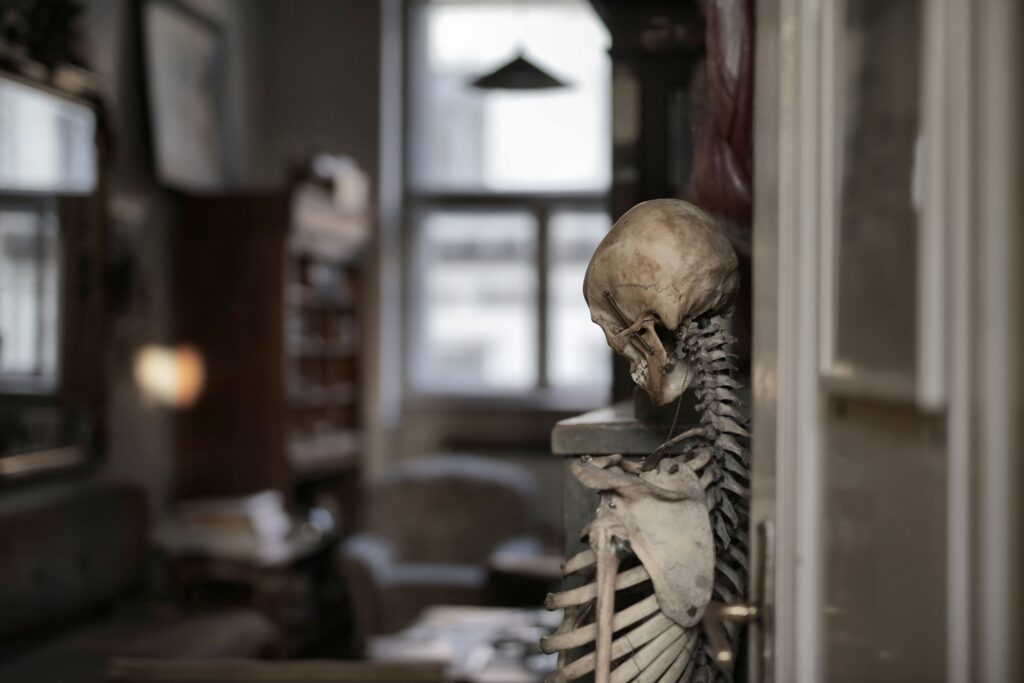
We all have skeletons in our closets! – Those hidden emotional wounded narratives and unmet needs we ‘tuck away’ so we can keep functioning. They unconsciously hide behind closed doors, not to punish us, but to poke us from the dark, usually at inconvenient times, to be heard.
We often speak about balance, alignment, and wholeness. Yet many of us move through life fragmented, wearing masks that help us survive but slowly disconnect us from others, and most importantly, disconnect us from ourselves. Struggles lie within this hidden space—beneath competence, humor, productivity, or spiritual positivity. But these skeletons are not signs of failure; they are the wounded parts of our past, asking for our attention in the present. NOT listening are missed ‘invitations’ to grow from the pain we encounter, and subsequently, the closet gets increasingly fuller, and increasingly more uncomfortable as the closet gets crowded…
The Skeleton as the Wounded Self
I refer to these ‘skeletons,’ with clients and readers, as the wounded self—the part of us shaped by experiences where our needs were unmet, our emotions were minimized, or our safety was compromised. This wounded self is not broken. It is surprisingly adaptive. It learned how to protect us when we had few options, feeling overwhelmed in seemingly unbearable situations.
But, because our brains and bodies were stressed at these times, the coping mechanisms we developed, which helped us survive, caused us to adopt inaccurate beliefs; we generalize and project into future situations that feel the same. If I am not enough. Others can’t be trusted. Life is too hard. Love is impossible… And that’s where it gets tricky.
Because we transfer these beliefs into adulthood, carrying wounded themes of distrust, control, autonomy, worthiness, and identity, disrupting us further at the adult stage when we are meant to create and maintain intimacy. This promotes behavioral reactions of minimizing, denying, suppressing, repressing, over-personalizing, blaming, avoiding, medicating, obsessing, and even dissociating. And this too easily gets us in our own way, causing more problems.
These skeletons are indeed trying to tell us something important.
The skeletons in our closet are not there to be fixed. They are there to be understood. It’s about removing the mask, turning the closet doorknob, and peering inside…
When Healing Feels Like Resistance
But most of us fear opening the closet door because we worry we will be overwhelmed by what we learn and feel.
Curiosity may have killed the cat, but it saved the human
When we ‘open’ and approach our skeletons with curiosity rather than fear or judgement, something shifts. Emotions that were once overwhelming become informative.
Unmasking as an Act of Self-Trust
Unmasking means being honest with yourself.
Naming what we feel is often the first step—sadness, anger, disappointment, hurt, betrayal, or fear—is a powerful act. It helps to identify what we need, what hurts, and what no longer works for us.
This process restores flow. Energy once bound in suppression becomes available for creativity, connection, and vitality. The nervous system settles. The body responds.
The Only Reason You’re Opening the Closet in the First Place is to Make Life Better Now
Awareness alone is not enough to create lasting change. Insight must be paired with integration.
I call this deeper ‘heart surgery’—The Circuits of Healing. Old-school psychotherapy was great at providing non-judgemental spaces to speak out and reframe the ‘demons,’ even make friends with the ‘devil.’
I take it one step further (the last of the 3-step circuit) to zero in on a specific tool/habit/response in our current life to practice because of the insight and reframe. To distinctively transfer over the exploration and reframe to make life better NOW.
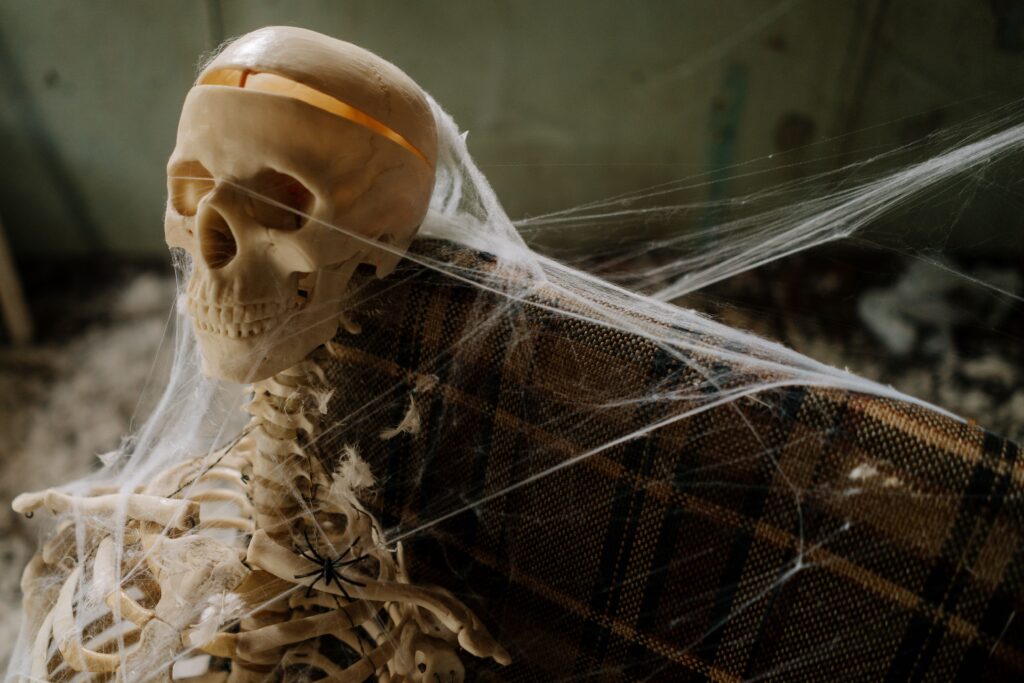
Using the Skeleton in your Closet
This exercise is your invitation.
- Create a moment of quiet, then explore a painful part. Find a comfortable place to sit. Take three slow breaths, allowing your body to settle. Travel deep into your darkness. Bring to mind a painful experience that is ‘hiding in the corner’—a loved one betrayed you, you were bullied, you lost a job, you got sick…
- Notice what meanings you have attached, and reframe: How did this experience change what you believed about yourself, others, life, and love? I’m not good enough. Others always leave me. Life is unbearable. Love always hurts. If this pain were an image of an object, animal, place, or force of nature, what would it be? – a deep hole, a frightened kitten, an empty desert, a destructive hurricane… If your healthy self offered you a specific gift that helps/eases/soothes that image/that pain, what would it be? – a candle, a blanket, a bucket of water, a strong shelter… What is the deep meaning of this gift? I can handle the truth (the light of the candle); I deserve to be surrounded by warmth (signified by the blanket); I am capable of achievement, empowerment, and connectivity (refreshed by the water); I need better boundaries (provided by the shelter).
- Now, transfer the meaning of this gift into your life in a consistent, actionable way. Download the image and add a caption that captures the meaning of the gift. Put the image on your home screen or lock screen, or print it off and frame it where your brain sees it multiple times a day for frequent reminders. (So, the wisdom of your heart informs your head).
Hold yourself accountable for taking these new beliefs into your daily life, changing your reactions into responses. Practice Factual Thinking (the truth). Deepen conversations with intimate topics of fears, needs, and joys (increasing warmth). Take educated risks to ‘level up’ (evidence of achievements). Say “no” when your wise gut is telling you something isn’t right for you (evidence of boundaries).
A New Way Forward
Perhaps wholeness is not about having it all together. Perhaps it is about listening to what has been asking for your attention all along.
The skeletons in your closets are not there to haunt you. They are there to heal you.
When you open your door—gently, honestly, and with accountability—you reclaim the parts of yourself that were never meant to be hidden.

“The skeletons in your closets are not there to haunt you. They are there to heal you.”
– Karen Goslin
- Connect with Karen Goslin
- More articles from our Executive Contributor, Karen Goslin
