


What If … The Two Most Powerful Words You Can Ask Yourself
Two words. That’s all it takes to change your mind and how you feel about everything.
You could try more immersive programs if you’ve got the time and energy, or you could start here. Just two humble, curious, sneakily revolutionary words: “What if?”
Most of us spend our mental energy asking the wrong questions. We ask, “Why is this (or does this) always happen to me?” or “What’s wrong with me?” or “Why can’t I get it together?” These questions feel like an inquiry, but they’re actually traps, closed loops that your brain answers with more evidence of limitation. They don’t open doors. They deadbolt them.
If you ate a pint of ice cream in one sitting and asked yourself, “Why did I do that?” most likely you’re going to blame and/or judge yourself. There’s never really an answer that doesn’t involve, “I should know better!”
“What if,” on the other hand, is a master key.
The Game Your Mind Was Born to Play
Your brain is constantly generating a prediction, almost like a Zoltar machine. From the moment you wake up, it’s running simulations, anticipating outcomes, filling in blanks. Literally, it’s already playing “what if” all day long, but most of the time, it’s running the worst possible catastrophic version. “What if I fail? What if they judge me? What if it all falls apart?”
Here’s what the science of neuroplasticity teaches us: brains don’t distinguish between a vividly imagined experience and a real one. When you picture something with high-level emotional detail, your nervous system responds accordingly; stress hormones spike when you catastrophize (or the inner bully jumps in to share its mean versions).
And, here’s the amazing flip side, possibility hormones fire when you imagine something expansive and good. Whoa, what?
So why not play the game intentionally? Why not aim the “what if” toward the life you actually want?
What If … the Negative Were Real and You Survived It?
Before we leap into the spiritual bypass (saying everything is just GREAT when it’s obviously not), there’s a powerful and often overlooked “what if” worth exploring: an honest, unflinching look at your fears.
What if the thing you fear most actually happened? Not to spiral into dread, but to discover something remarkable: you would survive. You would adapt. You would find your way.
When I was healing from my brain injury, I realized my biggest fear was ending up homeless since I couldn’t work. I asked myself what would happen if I lost my home and realized I’d cultivated a life with supportive people who would let me move in. They wouldn’t leave me homeless.
The Stoics called this practice “premeditatio malorum”: the premeditation of adversity. When you walk all the way through the feared outcome in your mind and realize you could handle it, fear loses its stranglehold. You stop letting the possibility of failure keep you frozen in place. You discover that the worst case is rarely as permanent or as devastating as your anxious mind has made it out to be.

By asking yourself the deep questions, you can uncover so many things:
“What if I lost this job? I’d find another or start that consulting gig I’ve been thinking about.”
“What if they say no? I’ll ask someone else.”
“What if I made an epic mistake and everyone knows? I’d use it to learn and make changes going forward.”
Meeting fear directly, rather than running from it, is one of the most liberating things you will ever do.
What If … You Could Actually Feel Better?
Now turn the question toward possibility.
What if you could feel genuinely good, not just okay, not just managing, but actually vibrant? What if sleep were restorative, not just something you fall into at night? What if your constant anxiety was something you could actually work through, not just endure?
This is a glimpse into what could be possible, and it’s not just you being naive.
The moment you ask “what if I could feel better,” your brain stops going down the “why do I always feel so awful” rabbit hole and looks for evidence that change is possible. It begins recruiting your reticular activating system, memory, imagination, and problem-solving skills to achieve a new outcome. A shift, from resignation to inquiry, is where healing often begins.
What If … You Became the Person You’ve Always Wanted to Be?
This is the big one. One living quietly in the back of your mind, dusted over with what’s practical and years of “being realistic.”
What if you could truly become the best version of yourself?
The real-life best version (not some perfect imaginary you) who shows up with presence, speaks with honesty, moves through difficulty with grace, and takes care of their body, their relationships, and their inner life with intention.
Try this: close your eyes for a moment and feel into the question.
What if this person, the one you sense you’re capable of being, wasn’t a distant aspiration but a here-and-now reality you’re actively growing into?
How would she walk into a room? How would he respond to a setback? What would you eat, say, choose, risk, or forgive?
Identity often follows our imagination. Before we become the next version of ourselves, we must first imagine ourselves as that person.
“What if” is the bridge.
How to Play the Game Daily
You don’t need a journal, a retreat, or a perfectly quiet morning to use this practice (although they are all great). You need thirty seconds and a willingness to ask questions.
Here’s a simple framework for you:
Morning: Ask, “What if … today was even better than I expect?” Set the tone before the day sets it for you.
When fear arises: Ask, “What if … this isn’t as bad as I’m imagining?
What if things happened and I handled them?” Walk through it. Find your grounding.
When stuck: Ask, “What if … there’s a version of this outside of the box?
What might that look like?” Open the aperture.
At night: Ask, “What if … who I am becoming is more aligned with who I want to be and more than enough?” Rest in that.
A Question To Change Everything
The most powerful conversations you will ever have are the ones you have with yourself. And the most powerful questions in those conversations are the ones that crack open possibilities rather than confirm any limitation.
“What if” isn’t Pollyanna optimism; its roots are in many psychological disciplines and neuroscience. It’s using your imagination with discipline, the deliberate practice of keeping the future open, even when everything in your history says to close it. It is how every person who has ever changed their life began: not with certainty, but with a question.
You don’t need to have the answers. You just need to stay curious enough to keep asking.
What if the life you’ve always imagined is closer than you think?
Ask the question. Then live toward the answer.
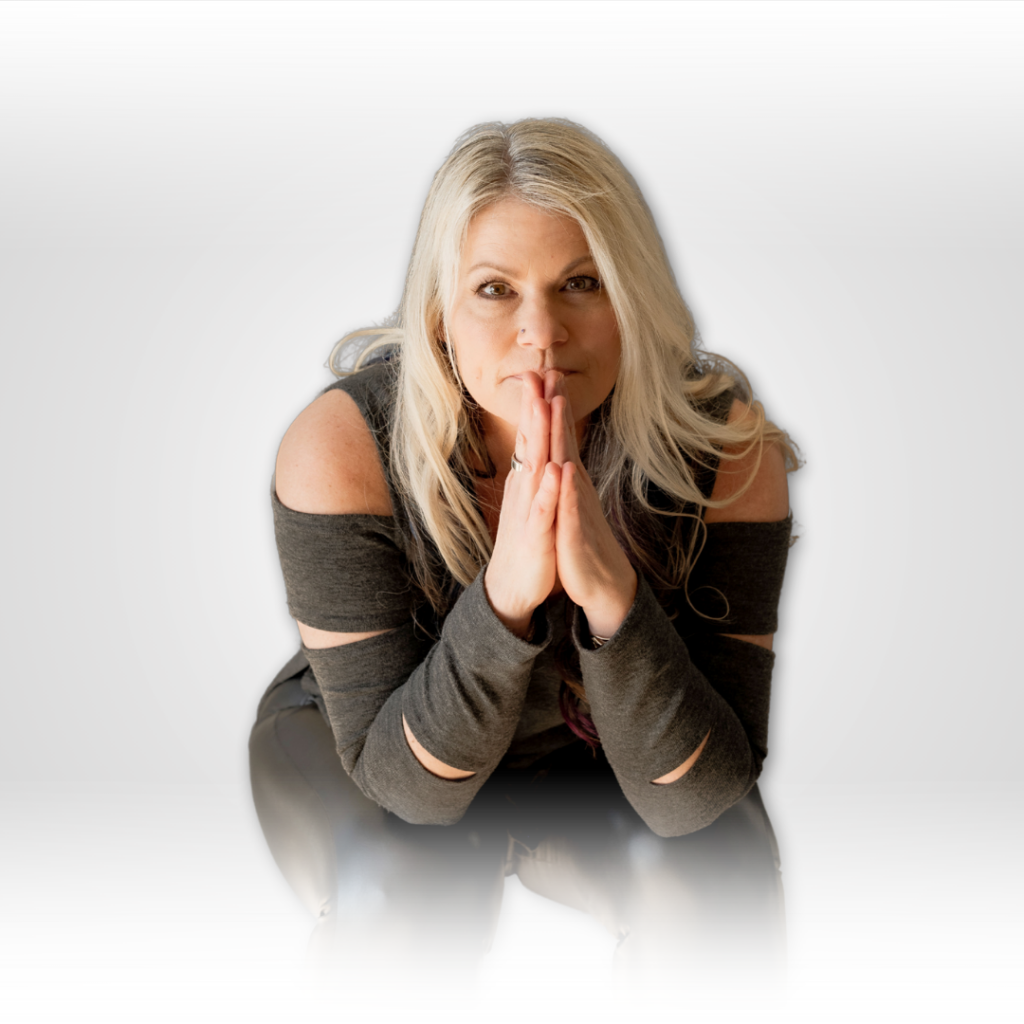
“Two simple words that can be a rapid reframe and shift your mindset and emotional state.”
– Theresa Byrne
BOOK YOUR ACTIVATION SESSION TODAY.
AND RELEASE SOMETHING THAT HOLDS YOU BACK!

- Connect with Theresa Byrne
- More articles are available from our VIP Executive Contributor, Theresa Byrne
