

Exclusive Interview with Editor-in-Chief, Jana Short

Real Food, Real Healing: Inside the Work of Nutritional Therapist Jenny Fontana
A Best Holistic Life Magazine Cover Feature
When Jenny Fontana talks about food, something in her voice shifts—softens, warms, remembers. It’s not nostalgia. Its lineage. It’s lived wisdom passed down from the women who stirred, simmered, and seasoned before her.
“I grew up watching, listening, and learning from my grandmother in her kitchen,” she says, a small smile audible in her words. “Food was healing for me… it was friendship, it was comfort, it was caring.”
For Jenny, the kitchen was never just a place—it was a sanctuary. A classroom. A compass. And somewhere along the line, it became a calling.
Today, as a Nutritional Therapist specializing in addiction recovery, she stands at the intersection of two worlds that rarely speak to each other: the science of nutrition and the complex terrain of sobriety. And she is filling a void that few even realize exists.
This is Jenny Fontana’s work—and the beautiful, necessary disruption she is bringing to the recovery landscape.
The Making of a Nutritional Therapist
Jenny’s path toward nutritional therapy was shaped not by ambition, but by need. As a young adult, her own health began to unravel—thyroid issues, hormonal imbalances, postpartum challenges. Traditional medicine offered prescriptions, not solutions.
So she did what so many women learn to do: she turned inward. She trusted her instincts. She experimented. She learned. She listened to her body.
“Through food changes, lifestyle changes, and supplementation, I was able to heal the things naturally that I couldn’t do with the medication they wanted to put me on,” she explains.
Her healing became a doorway. She knew she wanted to help others do the same.
She earned her certification as a Nutritional Therapist, fully expecting to work with people like her—young women, new mothers, and breastfeeding moms navigating hormonal chaos and the beautiful, exhausting seasons of life.
But then one phone call changed everything.

A Gap No One Was Talking About
While studying nutrition, Jenny began working alongside Dr. Cali Estes and The Addictions Academy. What she found stunned her.
“I had a lot of questions,” she remembers. “I started learning about the gaps that are in play in the recovery industry… a lot of places just don’t deliver the nutritional requirements someone might have.”
Addiction strips the body—first slowly, then brutally—of nutrients that are essential for cell repair, brain function, hormone balance, and mood regulation. Once someone enters early recovery, the body’s deepest deficits surface.
The tragedy?
Most treatment centers never address them.
People often assume the shaking, fogginess, irritability, or exhaustion that follows detox are “withdrawal symptoms.” And sometimes they are.
But many are nutritional deficiency symptoms—and they can mimic withdrawal so closely that people relapse, believing their recovery “isn’t working.”
“You might have brain fog… weight loss or weight gain… but you’re not replacing anything your body needs,” Jenny explains. “You’re just left in this feeling crappy—and that’s when people slide back into relapse.”
Her voice is calm, but the truth lands hard.
The system is missing a critical piece of the healing puzzle.
And Jenny stepped directly into that void.
Real Food for Real Recovery
Jenny’s work is simple in theory but revolutionary in impact:
Re-teaching the body what nourishment feels like.
Her clients, many recently sober, often enter recovery having spent years—sometimes decades—without consistent, nutrient-rich meals. Alcohol robs the body of B vitamins, magnesium, and amino acids. Opioids disrupt metabolism and digestion. Stimulants flatten appetite entirely.
When the substances disappear, the deficiencies remain.
This is where Jenny comes in.
“It’s reteaching, reintroducing that relationship of food as survival,” she says. “You need this to be healthy again. You want to be clear-headed. You want your hormones to balance out. You want to be able to function.”
Instead of diets or dogma, she brings people back to the basics:
— What is a balanced meal?
— How much protein does your body need?
— What does hydration actually look like?
— How do you build a plate that fuels healing?
The work is tender, patient, foundational—and lifesaving.

Breaking the Cycle of Substitution
It’s common in recovery communities for substances to be replaced with sugar, caffeine, nicotine, or ultra-processed foods. Twelve-step meetings often offer donuts, candy, and energy drinks. The aim is comfort, community, and immediate relief.
But there’s a cost.
“When they get clean… they usually turn to sugar,” Jenny notes. “It’s donuts, caffeine, cigarettes… they’re filling the gap with something else.”
The problem is subtle but significant:
When emotional regulation is outsourced to sugar instead of alcohol or drugs, the body still never learns to stabilize itself.
Jenny’s approach helps clients break that cycle—not through deprivation, but through education, empowerment, and full-body nourishment.
Food as a Lifeline—Not a Luxury
One of the most pervasive myths Jenny tackles is the belief that healthy food is too expensive, too time-consuming, and too complicated for people recovering from addiction.
But as she firmly points out in her interview, the idea that fast food is cheaper is often untrue.
People simply haven’t been taught the skills.
“It’s learning all these concepts again,” she says. “A lot of people don’t even learn these pieces anymore… It’s just cheap and easy to grab fast food and bring it home.”
So she teaches them what many never learned:
— How to navigate a grocery store
— How to read labels
— How to prep meals
— How to budget
— How to choose whole ingredients over convenience traps
“We do grocery store tours,” she shares. “It reminds me of home ec class. Going back to the basics.”
This, in many ways, is the heart of her mission:
Giving people the tools to feed themselves for a lifetime.
The Future Jenny Is Building
Jenny carries a vision—not for a trend, but for a transformation.
“I love the idea of every facility having on-site nutrition services,” she says. “Even better would be someone you work with after you leave—like a sober companion or a recovery coach, but for nutrition.”
Because recovery doesn’t happen in a center.
It happens in grocery aisles.
In kitchens.
In daily routines.
In the quiet spaces where people decide who they are becoming.
Her dream is to see nutritional therapy woven into every stage of addiction recovery—from detox to aftercare—giving people not just the tools to survive, but the tools to thrive.
Teaching People to Feed Their Future
Jenny’s work extends through The Addictions Academy, where she developed an entire Nutritional Recovery Coach certification program, training others to carry this knowledge into their own communities.
“I created a nutritional recovery coach course,” she explains. “I teach people to be a nutritional coach… boots on the ground for clients coming out of treatment.”
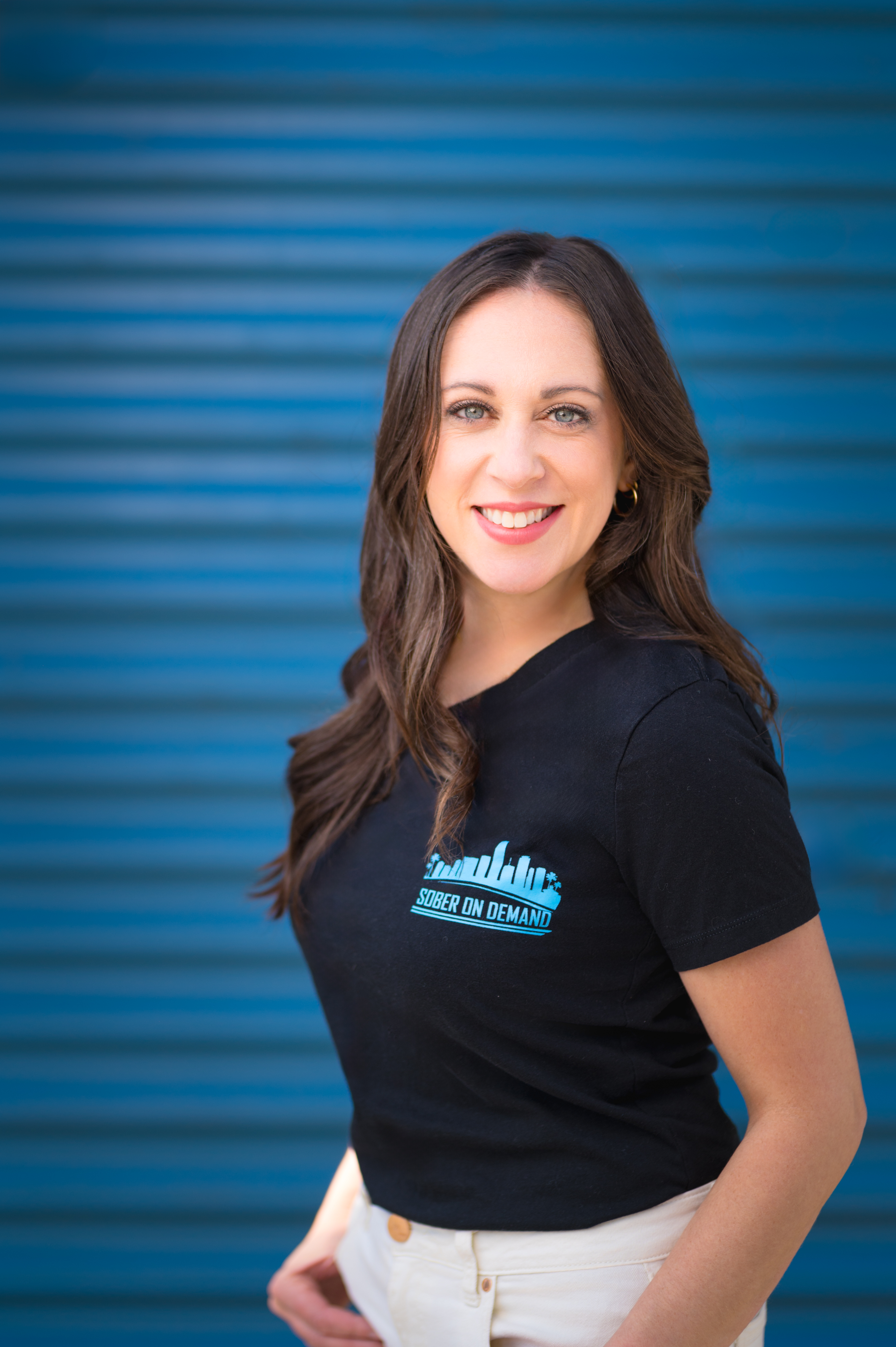
On the Sober on Demand side, she works one-on-one with clients from every background—rebuilding health through food, recalibrating hormones, repairing metabolism, and restoring clarity.
Her philosophy is refreshingly free of extremes.
No rigid labels.
No dietary dogma.
Just whole foods, lived wisdom, and the belief that the body remembers how to heal.
“I don’t pigeonhole people to any type of diet,” she says. “It’s about the individual and what your body tells you you should be doing.”
Her approach is humane, hopeful, and deeply intuitive—the way healing should be.
Why Jenny Matters
Every once in a while, a practitioner enters the wellness world whose work feels less like a service and more like a movement. Jenny Fontana is one of them.
She is not trying to fix people.
She is trying to remind them that they are repairable.
That the body is wise.
That healing is possible.
That nourishment is a right, not a privilege.
And she is reminding the recovery world of something fundamental:
Sobriety is not just about what you let go of —
It’s about what you feed, rebuild, restore, and reclaim.
Her clients don’t just regain their health.
They regain themselves.
Real food.
Real healing.
Real recovery.
That is the gift Jenny brings.
And that is why we are honored to feature her in this month’s issue of Best Holistic Life Magazine.

