


You Cannot Pour from an Empty Cup: A Holistic Approach to a Woman’s Year-End Planning
As the year winds down, November offers a valuable pause before the rush of December. It is a timely opportunity to look back, assess where we are, and make thoughtful decisions about where we want to go—before year-end deadlines, family commitments, and financial pressures compete for our attention.
But for women approaching or already living in retirement, reflection requires more than reviewing the highlights of the past twelve months. It means asking whether the life you are living is financially sustainable, physically supportive, emotionally fulfilling, and genuinely your own.
That can be an uncomfortable question for women who have spent decades putting everyone else first.
Many have raised children, supported spouses, helped adult children through difficult transitions, cared for aging parents, managed households, maintained careers, and quietly absorbed the emotional labor that keeps families functioning. Many have become so accustomed to being the person others depend upon that they may never stop to ask:
Who will support me?
That is not selfishness. It is retirement planning.
The Holistic Truth About Retirement
In a holistic wellness community, we understand that health encompasses more than nutrition, exercise, and medical care. It includes financial stability, emotional resilience, meaningful relationships, purposeful engagement, personal care, and the ability to make choices.
These elements are interconnected.
Financial stress can disturb sleep, affect physical health, strain relationships, and make it harder to seek appropriate care. Health challenges can increase expenses, reduce independence, interrupt work, and alter retirement plans. Caregiving can create purpose and connection, but it can also drain energy, income, savings, and emotional reserves.
A truly holistic retirement plan must therefore connect wealth with health, purpose, family, housing, care, and community.
Consider the woman who paused her career to raise children and then assumed caregiving responsibilities for aging parents just as she began rebuilding her earning power. Her retirement account may not reflect the economic value of everything she contributed to her family.
Consider the woman who postponed travel, education, or a business idea because someone needed her. She may have accumulated years of deferred dreams alongside her financial assets.
Consider the woman who has saved diligently but wonders whether she will have the health, companionship, or confidence to enjoy what she has built.
These are not isolated lifestyle concerns. They are retirement variables.
Your Finances Are Part of Your Wellbeing.
For too long, financial planning and wellness planning have been treated as separate conversations. One took place in a financial professional’s office; the other occurred in a physician’s office, a yoga studio, a therapist’s office, or around the kitchen table.
Real life does not divide itself that neatly.
A decision to retire affects income, taxes, health insurance, Social Security, daily structure, relationships, and identity. A decision to care for a parent may affect work hours, transportation expenses, housing arrangements, physical health, and retirement contributions. A decision to move closer to family may change housing costs, access to healthcare, social connections and relationships.
The better question is not simply, “Do I have enough money to retire?” It is:
“Do my financial resources support the way I want and may need to live?”
That question opens a more complete conversation.
It includes dependable income, emergency reserves, healthcare costs, caregiving contingencies, housing, taxes, insurance, legal documents, family expectations, and the people you will rely upon if your circumstances change.
Money is not the entire story. But pretending it is separate from the story does women no favors.
Why This Year-End Matters
The beginning of a new year can feel like a clean slate, but November and December offer something equally valuable: a decision point.
Some financial choices must be completed before December 31. Others allow you to wait until the final annual tax filing day. More importantly, an early year-end review provides an opportunity to identify whether your money is still aligned with your life.
Begin with two conversations.

The Conversation with Yourself
Ask:
- What do I value now, at this stage of my life?
- Is my current spending aligned with those values?
- What does retirement mean to me, rather than what advertising or social expectations say it should mean?
- What dreams have I postponed, and which still matter?
- What am I continuing out of habit, guilt, or fear?
- Am I realistic about my health, resources, housing, and support system?
- Where have I mistaken endurance for wellbeing?
These questions may reveal that the issue is not simply whether you have enough. You may need to decide what “enough” is meant to accomplish.
The Conversation with Others
Retirement rarely affects only one person. Important conversations may include:
Family members who may one day need your care.
Adult children who assume you will provide financial or caregiving support.
The people you expect to help you if you need assistance.
A spouse or partner whose vision of retirement may differ from yours.
Financial, tax, legal, healthcare, or mental-health professionals who can identify risks you cannot see alone.
The objective is not to create anxiety. It is to replace assumptions with clarity.
Silence is not a plan.
Your Year-End Financial Wellness Review
Before focusing on resolutions, review the financial decisions that may require attention before year-end.
Review Your Retirement Contributions
For 2026, the employee contribution limit for most 401(k), 403(b), and governmental 457 plans is $24,500. People age 50 or older may generally contribute an additional $8,000. Participants who are ages 60 through 63 may be eligible for a higher catch-up contribution of $11,250, depending on the plan. The 2026 combined contribution limit for traditional and Roth IRAs is $7,500, or $8,600 for those age 50 or older, subject to compensation and income rules.
Reviewing these numbers is not merely a tax exercise. Increasing a contribution can strengthen future independence. But do not maximize retirement accounts while leaving yourself without an adequate emergency fund or taking on high-interest debt. The strongest decision is the one that fits your complete financial picture.
Ask your financial professional whether your current contribution level, tax treatment, investment allocation, and available cash reserves remain appropriate.

Confirm Required Minimum Distributions
Required minimum distributions generally must be received by December 31 each year. The exception applies only to an individual’s first RMD, which may be postponed until April 1 of the following year. Delaying that first distribution, however, generally means taking two RMDs—and reporting both as income—in the same calendar year. Workplace-plan rules can differ for people who remain employed, and inherited accounts have separate requirements.
Missing an RMD can create penalties and administrative complications. Do not assume that every custodian, former employer, or inherited account has been coordinated automatically.
Review all applicable accounts and verify that the correct distributions have been taken. Also consider how those withdrawals may affect taxable income, Medicare premiums, charitable plans, and future cash flow.
Coordinate Charitable Giving
Generosity can be both personally meaningful and financially strategic.
Beginning with tax year 2026, taxpayers who do not itemize may be able to deduct up to $1,000 in qualifying cash contributions, or up to $2,000 for married couples filing jointly, provided the contributions meet federal requirements.
People age 70½ or older may also be able to make qualified charitable distributions directly from an eligible IRA to a qualifying charity. A properly completed QCD may count toward an RMD and may be excluded from taxable income, subject to applicable rules and annual limits.
The operative word is directly. The distribution generally must move from the IRA custodian to the qualifying organization. Writing a personal check after receiving the IRA distribution may not produce the same tax result.
Charitable intentions deserve more than a hurried December transaction. Coordinate them with your tax and financial professionals.
Review Investment Gains and Losses
If you hold investments in taxable accounts, year-end may be an appropriate time to evaluate realized gains and losses.
Capital losses can offset capital gains. When losses exceed gains, individuals may generally deduct up to $3,000 of the remaining net loss against other income, or $1,500 for married taxpayers filing separately, with unused losses potentially carried forward.
However, do not sell a sound investment merely to create a tax loss. Tax strategy should support the investment strategy, not replace it.
Transaction costs, portfolio balance, holding periods, the wash-sale rules, and your long-term objectives all matter.
A tax benefit attached to a poor investment decision is still a poor investment decision, wearing a nicer outfit.

Evaluate Health Savings Opportunities
For eligible individuals covered by a qualifying high-deductible health plan, the 2026 Health Savings Account contribution limit is $4,400 for self-only coverage and $8,750 for family coverage. Additional catch-up contributions may apply beginning at age 55, provided eligibility requirements are met.
HSAs can play a valuable role in retirement healthcare planning because qualifying contributions may receive tax advantages, earnings can grow tax-deferred, and withdrawals for qualified medical expenses can be tax-free.
But eligibility changes when Medicare begins. Women approaching age 65 should coordinate HSA contributions, Medicare enrollment, Social Security timing, and employer coverage carefully rather than treating each decision independently.
Examine Your Tax Withholding
Retirement often changes the way taxes are collected. Instead of one employer withholding taxes from a paycheck, income may come from Social Security, pensions, retirement accounts, consulting work, investments, or other sources.
Review whether enough federal and state taxes are being withheld or paid through estimated payments. A major retirement distribution, investment gain, Roth conversion, business-income change, or property sale may alter your tax position.
The goal is not necessarily to receive a large refund. A refund may simply mean you gave the government an interest-free loan. The goal is to avoid an unpleasant surprise while keeping more of your money available throughout the year.
Update the Documents That Protect Your Choices
Financial wellness also depends on whether someone can act for you when you cannot act for yourself.
Review your beneficiaries, will, trust provisions where applicable, financial power of attorney, healthcare directives, insurance coverage, account titling, and emergency contacts.
Marriage, divorce, widowhood, births, deaths, relocations, estrangement, and changed caregiving relationships may make old instructions obsolete.
An estate plan is not only about what happens after death. It is also about protecting decision-making during life.
Redefining Success in Your Second Act
A woman with modest financial resources but strong relationships, manageable expenses, good health, and a clear sense of purpose may experience a richer retirement than someone with substantial assets who feels isolated, anxious, or directionless.
That does not mean money is unimportant. It means money is a tool, not the definition of a life.
A holistic retirement considers four forms of personal capital:
- Time: How will you use your most finite resource?
- Energy: Which commitments deplete you, and which restore you?
- Relationships: Who supports your growth, and where are boundaries overdue?
- Financial resources: What level of income, liquidity, protection, and flexibility will support your desired life?
These forms of capital interact. Saving money while sacrificing all your health and time is not automatically successful. Spending freely without protecting your future independence is not freedom. Continually rescuing others while destabilizing your own retirement is not generosity without consequences.
The task is integration.
The Gift of Honest Planning
Holistic wellness teaches us that we cannot pour from an empty cup. Yet women are often praised for continuing to pour long after the cup is running dry.
Self-care is sometimes presented as a massage, a quiet walk, or an evening without obligations. Those things can matter. But mature self-care also includes reviewing your insurance, saving for your future, setting financial boundaries, completing legal documents, scheduling medical appointments, asking for help, and declining responsibilities that others can reasonably share.
It may mean telling adult children that your retirement savings are not an unlimited family emergency fund.
It may mean acknowledging that caring for a parent will require paid assistance rather than assuming one woman can absorb every task.
It may mean spending some of the money you saved to create experiences while your health allows you to enjoy them.
It may also mean allowing yourself to imagine a future that is not defined entirely by usefulness to someone else.
That can be difficult for women whose identities have been built around competence, caregiving, and responsibility. But retirement should not become another chapter in which your needs are perpetually postponed.
Use November to Create Breathing Room
November offers something December often does not: space to think before deadlines, celebrations, family obligations, and year-end decisions begin competing for attention.
Use that space to take five meaningful actions:
- Review where your time, energy, and money have gone this year.
- Identify one postponed dream and define a realistic first step.
- Map the people and professionals who make up your support network.
- Schedule one conversation that you have been putting off.
- Begin a coordinated financial, tax, healthcare, and legal review before year-end pressure builds.
You do not need to resolve every aspect of retirement this month. You do need to identify what requires attention, what can wait, and what should no longer be ignored.
Plan Before the New Year Arrives
Before December fills the calendar, ask yourself:
What would it mean to design a retirement that honors my whole self?
Not only the caregiver, earner, organizer, problem-solver, or nurturer, but the woman who has her own ambitions, curiosities, needs, and definition of a life well lived.
Your next chapter does not have to be shaped by sacrifice alone. It can be built through integration: responsibility with joy, financial security with purposeful spending, service with boundaries, planning with presence, and independence with meaningful connection.
Whatever your age, whatever you have saved, and however much you have already given, there is still time to make more intentional choices.
November is not merely the beginning of the holiday season. It can be the month when you create clarity before urgency takes over.
Your future self is not asking you to become selfish.
She is asking you not to disappear from your own plan.
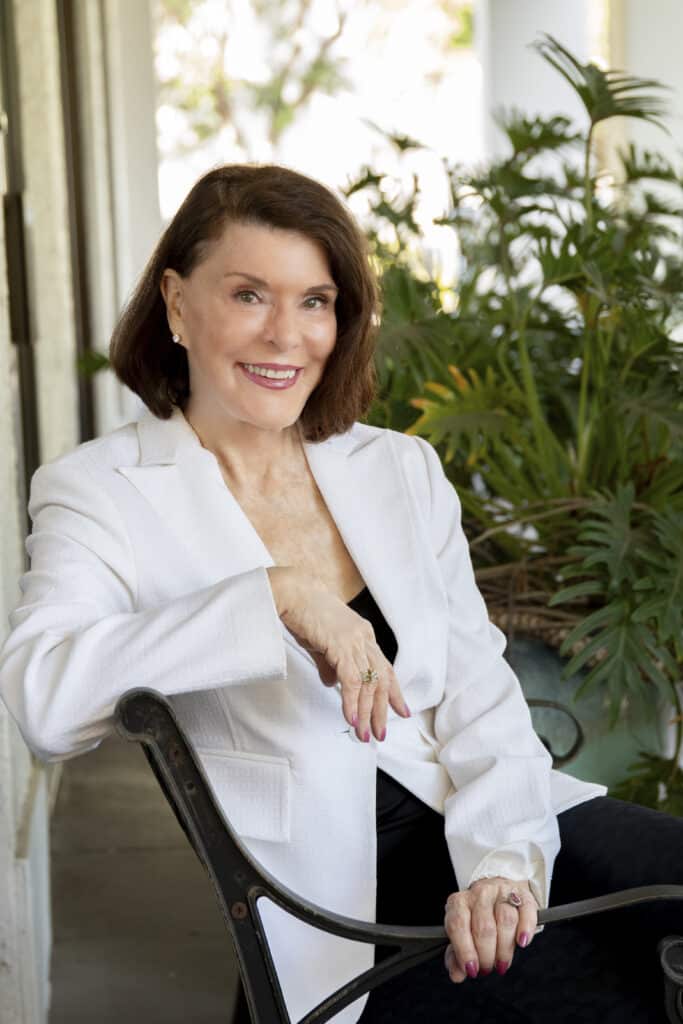
“Do my financial resources support the way I want and may need to live?”
— Carroll Golden


If you’re serious about shaping a future you actually want to live in, Leading in The New Retirement ERA isn’t a book you pick up—it’s a guide you step into. Carroll Golden hands you the keys to reinvention, resilience, and real-world leadership in a world where retirement isn’t an ending… It’s the power move of your next chapter. Crack it open, and you’ll feel that spark—the one that whispers, “This is your moment.” Go on. Claim it.
“Carroll Golden doesn’t just redefine retirement—she reimagines what’s possible. Leading in The New Retirement ERA is a bold, heart-forward roadmap for anyone ready to lead with purpose, clarity, and unstoppable confidence.” — Best Holistic Life Magazine
- Contact with Carroll Golden
- More articles from our Executive Columnist Carroll Golden
