

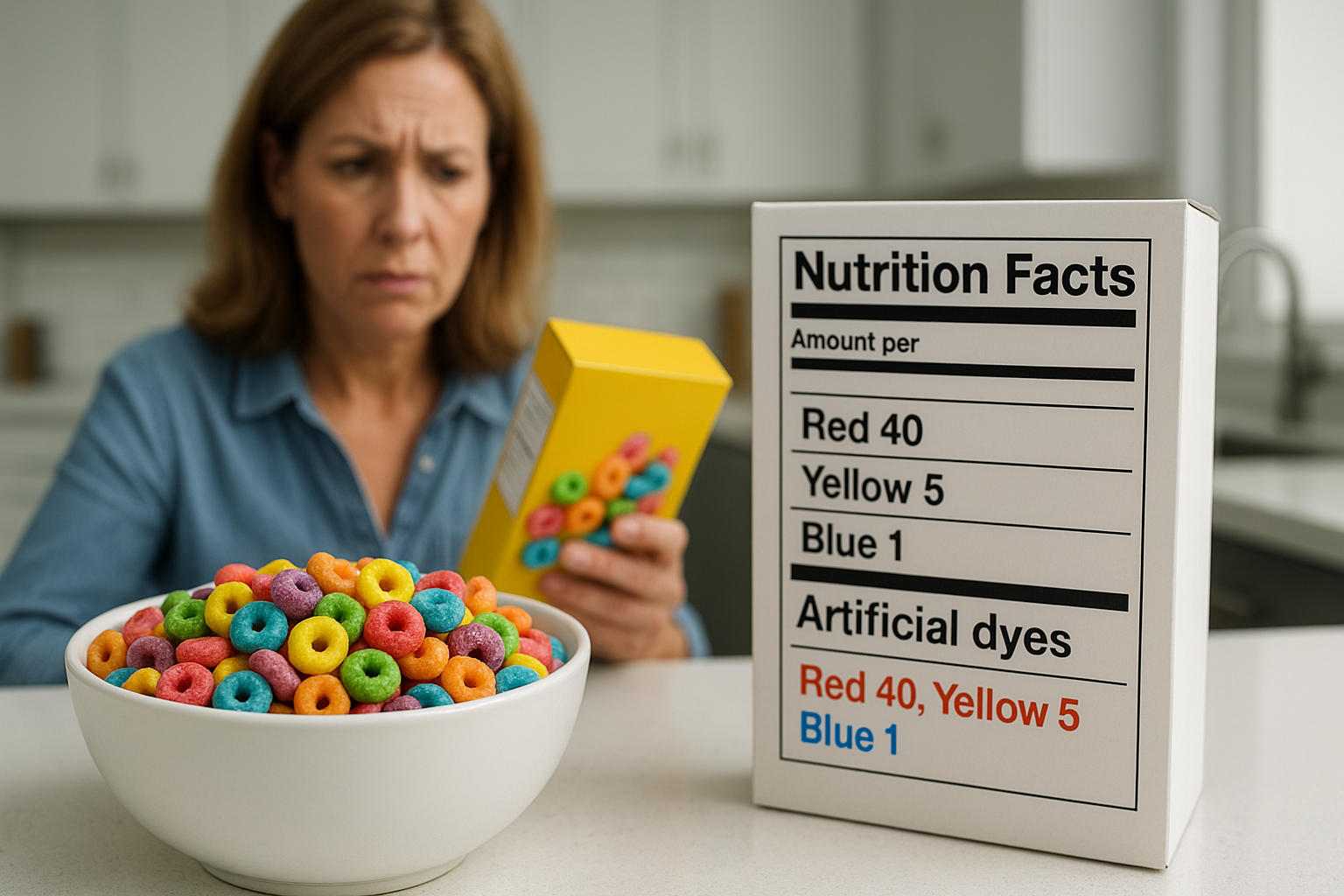
The FDA’s Bold Move to Remove Petroleum-Based Food Dyes: What It Means for You – For decades, vibrant candies, neon-colored sodas, and rainbow-bright cereals have been staples of American diets, particularly for children. But behind those eye-catching hues lies a controversial ingredient: petroleum-based synthetic dyes. On April 22, 2025, the U.S. Food and Drug Administration (FDA) announced a sweeping plan to phase out these artificial colorants, citing mounting concerns about their potential health risks.
The Problem With Petroleum in Our Food
Petroleum-derived dyes, such as Red No. 40, Yellow No. 5, and Blue No. 1, have been used since the mid-20th century to make processed foods visually appealing. However, their safety has been questioned for years. While the FDA historically deemed these dyes safe in small quantities, there are gaping holes in data on the cumulative effects of multiple dyes consumed together.
Animal studies have long suggested links between individual dyes and health issues.
For example:
- Red No. 3 (already banned in cosmetics since 1990) was prohibited in food and drugs in January 2025 after evidence tied it to cancer.
- Blue No. 2 and Green No. 3 have been associated with tumor growth in rodents.
- Yellow No. 5 (linked to hyperactivity in sensitive children) and Red No. 40 (found to contain trace carcinogens) are now under accelerated phase-out plans.
Yet, research has largely focused on individual dyes, not the “cocktail effect” of multiple additives consumed daily. “We’ve been conducting an uncontrolled experiment on our children for 50 years,” said FDA Commissioner Dr. Marty Makary.
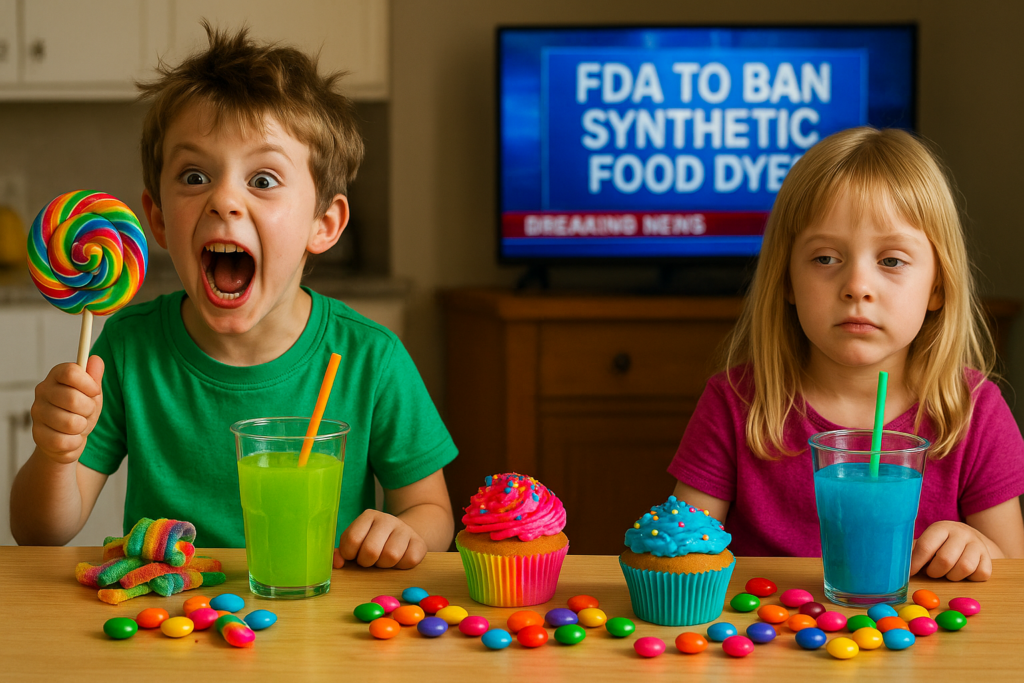
Industry Pushback and the “Safe in Small Amounts” Argument
Food manufacturers have historically defended synthetic dyes, arguing that they are safe at approved levels. Trade groups often cite FDA approvals and the lack of conclusive human studies to justify their use. However, critics counter that industry-funded research dominates the field, while independent studies, particularly on vulnerable groups like children, remain scarce.
While single dyes may fall below safety thresholds, no studies exist to confirm the safety of combined exposure, a common scenario given how many dyes appear together in products like candy, frosting, or flavored snacks. For example, a child eating a rainbow cupcake, fruit punch, and a multicolored cereal bar in one day could ingest six or more synthetic dyes.
“The absence of evidence isn’t evidence of safety,” said one FDA official involved in the review.
The FDA’s Phase-Out Plan
The FDA’s strategy involves two key steps:
- Banning Specific Dyes: Red No. 3 is already prohibited, and six others—Red No. 40, Yellow No. 5, Yellow No. 6, Blue No. 1, Blue No. 2, and Green No. 3—will be phased out by late 2026.
- Accelerating Natural Alternatives: The agency fast-tracked approval for four new plant-based colorants, including butterfly pea flower extract and gardenia blue, while pledging to streamline reviews for others.
Manufacturers are urged to comply ahead of the 2026–2028 timeline, with regulatory flexibility offered to ease the transition. The FDA also partnered with the National Institutes of Health to study the’ long-term effects of additives on children.
What Can You Do Now?
While the phase-out progresses, here’s how to minimize exposure to synthetic dyes:
- Read Labels: Avoid products listing “artificial color,” “FD&C” dyes (e.g., “Red 40”), or terms like “color added.”
- Choose Whole Foods: Fresh fruits, vegetables, and minimally processed snacks (e.g., plain popcorn) are naturally dye-free.
- Look for Certifications: Organic or “no artificial colors” labels often indicate safer alternatives.
- Swap Smart: Brands like Unreal (candy) and Annie’s (snacks) use turmeric, beet juice, or spirulina for color.
- Advocate: Contact food companies to demand faster transitions to natural dyes, and ask your local grocer to provide snacks that include natural dyes. A Healthier Future?
The FDA’s decision reflects a growing consensus that synthetic additives—especially those with unresolved safety questions—have no place in children’s diets. As natural alternatives gain traction, consumers may soon see fewer neon-bright snacks on shelves, replaced by products colored with ingredients like black carrots or hibiscus.
While the road ahead involves challenges, including cost and technical hurdles for manufacturers, the move signals a shift toward prioritizing long-term health over artificial aesthetics, as the U.S. Health Secretary Robert F. Kennedy Jr. bluntly stated, “If people want to consume petroleum, they should add it themselves at home. They shouldn’t be serving it to the rest of us.”

For now, parents and consumers hold the power to vote with their wallets, pushing the food industry toward a safer, more transparent future—one rainbow at a time.
Synthetic food dyes contribute to Total Stress Load, which is the sum of all chemical, physical, and mental stresses on the body. Quantifying this load is a relatively new science. To learn more about Total Stress Load, refer to the book Discovering the Nature of Longevity: Restoring the Heart and Body by Targeting Hidden Stress, available on Amazon.com.
This story was created with assistance from Perplexity.ai.
References: Potential impacts of synthetic food dyes on activity and attention in children: A systematic review (PMC, 2022). Artificial food dyes are toxic: Neurobehavioral implications in children (PMC, 2023) FDA says it will phase out petroleum-based food dyes, authorize four natural color additives (CNN, April 22, 2025) HHS, FDA to Phase Out Petroleum-Based Synthetic Dyes in Nation’s Food Supply (FDA.gov, April 22, 2025) US to phase out many synthetic food dyes, Kennedy and FDA head announce (Reuters, April 22, 2025)
Get Douglas Mulhall’s Book

- About the author: Douglas Mulhall’s latest book, Discovering the Nature of Longevity: Restoring the Heart and Body by Targeting Hidden Stress, explores prevention and therapies for heavy metal contamination. The American Institute of Stress recommends it and carries a Foreword by the Chief author of the American Heart Association statement on toxic heavy metals. He co-develops award-winning certifications and standards for products globally and is a registered ISO expert on a global standard for declaring the contents of products.
- Read more from VIP Executive Contributor Douglas Mulhall